










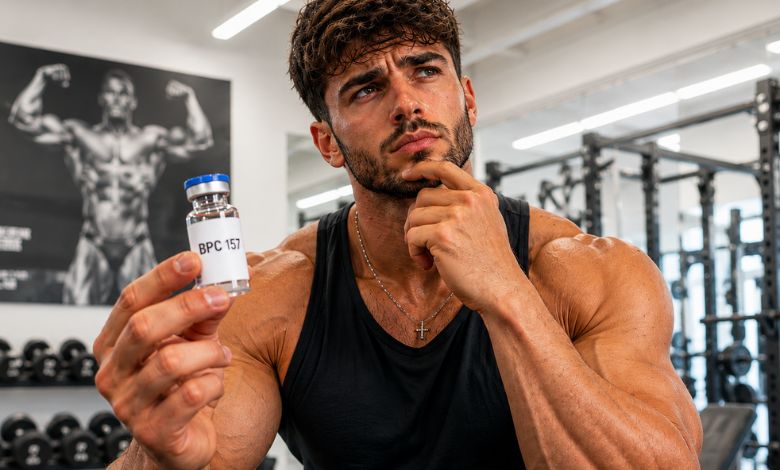
Does BPC 157 Build Muscle? What the Science Actually Says
If you have been researching peptide therapy for recovery or performance, you have likely asked the same question many of our Palm Beach Gardens clients ask on their first visit: Does BPC 157 build muscle directly, or does it work through a completely different pathway? It is a fair question, especially since social media often blurs the line between peptides that drive true muscle growth and peptides that simply help your body recover faster.
Here is the upfront answer: BPC-157 does not directly build muscle the way anabolic steroids, testosterone, or growth hormone secretagogues do. It does not stimulate muscle protein synthesis on its own, and it does not act on androgen receptors. What it can do is support tissue repair, reduce inflammation, and improve recovery, which over time can help you train more consistently and avoid the injuries that derail progress.
In this guide, we will cover the actual mechanism behind BPC-157, the difference between muscle growth and muscle recovery, how it compares to peptides that genuinely promote hypertrophy, realistic timelines, and who is a good candidate. Let’s get started.
The Short Answer: Does BPC 157 Build Muscle?
No, BPC-157 does not directly build muscle. It is a synthetic peptide that primarily aids in tissue repair, vascular regeneration, and reducing inflammation. However, by supporting BPC 157 muscle recovery, reducing downtime from soft-tissue injuries, and improving training consistency, it can indirectly create the conditions that allow muscle growth to happen over time.
At a glance:
- BPC-157 is a repair and recovery peptide, not an anabolic agent.
- It improves tendon, ligament, and muscle tissue healing in preclinical research.
- It does not raise testosterone, growth hormone, or IGF-1 directly.
- Bodybuilders and athletes use it for recovery support, not direct mass gain.
- Other peptides, such as CJC-1295 with Ipamorelin or Sermorelin, are far more relevant for muscle growth.
What Is BPC-157 and How Does It Work?
BPC-157 is a man-made peptide composed of 15 amino acids, originally derived from a protective protein found in human stomach juice. Researchers first studied it for its protective effects on the stomach lining and digestive tract, where it showed promise for ulcers, inflammatory bowel disease, and other gut-related conditions.
Over time, preclinical research expanded into tendon, ligament, muscle, and bone healing, which is why it became popular in recovery-focused peptide therapy. Importantly, BPC-157 is currently classified as a research peptide. It is not FDA-approved for general therapeutic use in humans, and the World Anti-Doping Agency added it to its Prohibited List in 2022. These are important context points that any clinically responsible provider will explain before therapy.
Primary Mechanisms of Action
The most relevant BPC 157 peptide benefits, based on the available research, come from four overlapping mechanisms.
- Angiogenesis. BPC-157 supports the formation of new blood vessels through VEGFR2 signaling, which improves nutrient and oxygen delivery to healing tissue.
- Anti-inflammatory action. It modulates inflammatory cytokines, reducing the chronic low-grade inflammation that interferes with recovery.
- Collagen synthesis. It supports collagen production, strengthening tendons, ligaments, and other connective tissues.
- Growth hormone receptor expression. Studies in tendon fibroblasts suggest BPC-157 can upregulate growth hormone receptors locally, making tissue more responsive to the body's own natural hormones.
To understand the foundational science, see preclinical research on BPC-157 and tendon healing available through PubMed. For a beginner-friendly overview, our team also covers what BPC-157 is in a separate post.
BPC-157 Muscle Growth vs. Muscle Recovery: The Critical Distinction
Most of the confusion around BPC 157 muscle growth comes from blurring two different processes: hypertrophy (true muscle building) and recovery (the tissue repair that has to happen before hypertrophy can occur). Setting realistic expectations is crucial for any peptide therapy consultation.
What "Building Muscle" Actually Requires
Real muscle growth is a tightly controlled biological process. It requires:
- Mechanical tension is applied through progressive overload in the gym.
- Muscle growth occurs when the synthesis of muscle proteins surpasses the rate at which muscle tissue breaks down.
- Adequate intake of dietary protein, providing the necessary amino acids, is vital for promoting muscle development.
- Anabolic hormonal signaling, including testosterone, growth hormone, and IGF-1.
- Sufficient recovery time between training sessions.
If any of these inputs are missing, hypertrophy slows or stops, regardless of which supplements or peptides you add.
Where BPC-157 Does Not Act
BPC-157 is not a muscle-building compound by any direct mechanism.
- It does not increase muscle protein synthesis.
- It does not bind to androgen receptors, so it is not a steroid or a SARM.
- This peptide does not act as a stimulant for growth hormone or promote its release in the body.
- It does not inhibit myostatin, the natural brake on muscle size.
- It does not provide amino acid building blocks for new tissue.
If your goal is direct mass gain, BPC-157 is not the tool for the job.
Where BPC-157 Does Help (Indirectly)
The recovery-side support is where this peptide actually earns its reputation. Reported and research-supported benefits include:
- Improved BPC 157 muscle recovery between heavy training sessions.
- Support for tendon and ligament healing, which reduces forced training breaks.
- Reduction of local inflammation that would otherwise blunt training adaptation.
- Enhanced blood circulation and nutrient supply to active muscles contribute to better recovery.
- Support for gut lining health, which can improve absorption of dietary protein on aggressive nutrition plans.
The takeaway is straightforward. BPC-157 does not build muscle, but it can help an athlete train more consistently and recover from minor injuries faster. Consistent training is what builds muscle over months and years, so any tool that protects training consistency has indirect value for BPC-157 for muscle growth conversations.
BPC-157 Bodybuilding and Athletic Performance Use
The BPC-157 bodybuilding conversation is one of the most active in the peptide space. It is worth addressing directly because the marketing online often overstates what this peptide can deliver.
Why Bodybuilders Are Interested
Bodybuilding and serious strength training place repetitive, high-volume stress on connective tissue. Tendons, ligaments, and joint capsules accumulate micro-injuries during heavy training blocks, especially during off-season volume phases. Recovery between sessions is usually the rate-limiting factor for hypertrophy, not the workouts themselves. This is where peptides like BPC-157 attract attention. The BPC-157 athletic performance benefit comes from reduced soft-tissue downtime, not from any direct anabolic action.
Realistic Performance Outcomes
Clinic clients commonly report several recovery-related observations, though individual responses vary and these are not guaranteed outcomes.
- Faster reduction of post-workout joint soreness and stiffness.
- Improvement in low-grade tendinopathy symptoms, especially in the shoulder, elbow, and patellar tendons.
- Ability to maintain training frequency during demanding volume phases.
- Less reliance on NSAIDs to push through minor aches.
These factors do not equate to visible muscle gain. They are quality-of-training improvements that compound over time.
BPC-157 Weight Gain and Water Retention
Two common questions deserve direct answers. BPC-157 is not known to cause BPC-157 weight gain through hypertrophy or fluid loading. It also does not cause significant BPC-157 water retention, the way growth hormone or some anabolic compounds can. Any scale weight change during a BPC-157 protocol is more likely the result of training consistency, hydration habits, and nutrition than the peptide itself.
The WADA Ban Matters for Competitive Athletes
This part is non-negotiable for anyone in a tested sport. The World Anti-Doping Agency (WADA) included BPC-157 in its prohibited list as of 2022. Athletes subject to anti-doping testing should refrain from using it. The career and eligibility risk far outweighs any recovery benefit. Recreational lifters and non-tested individuals do not face this specific restriction, but the regulatory landscape is one of the reasons physician supervision matters.
Peptides That Actually Stimulate Muscle Growth
If your goal is genuine muscle growth, BPC-157 is not the right solution. Other peptides act on the growth hormone and IGF-1 pathway, which is the real driver of hypertrophy in healthy adults. The table below puts the relevant compounds in context.
Peptide Direct Muscle Building? Primary Mechanism ThinWorks Offers?
BPC-157 No Tissue repair, anti-inflammatory action, angiogenesis Yes
CJC-1295 with Ipamorelin Yes (indirect via GH and IGF-1) Stimulates natural growth hormone release Yes
Sermorelin Yes (indirect via GH) GHRH analog that boosts natural GH production Yes
AOD-9604 No (fat-focused) Supports fat metabolism while preserving lean mass Yes
CJC-1295 and Ipamorelin: The Real Growth Pathway
CJC-1295 paired with Ipamorelin is one of the most well-known peptide combinations for natural growth hormone support. CJC-1295 increases the amplitude of natural GH pulses, while Ipamorelin selectively stimulates a clean GH release without significantly raising cortisol or prolactin. Together, they raise downstream IGF-1, which is one of the actual drivers of muscle protein synthesis and tissue repair.
Sermorelin
Sermorelin is a GHRH analog that prompts the pituitary to produce more of the body's own growth hormone. It is widely used in age-management and recovery protocols where supporting natural GH levels is the goal.
Stacking BPC-157 With Growth-Supportive Peptides
Under medical supervision, BPC-157 is often layered with GH-stimulating peptides. The logic is simple: BPC-157 handles the repair and protection side of the equation, while CJC-1295 with Ipamorelin or Sermorelin supports the growth-signaling side. This combination is one of the most common reasons clients ask about our peptide therapy services.
Here's what we advise against. You will see online articles list compounds like SARMs, GHRP-6, MK-677, or Follistatin alongside peptide therapy. ThinWorks does not offer these. They carry meaningful safety, regulatory, or long-term unknown risk profiles, and we prefer to work with peptides that have a more defined clinical track record and a physician-supervised pathway.
What Realistic Results Look Like With BPC-157
Being clear about what to expect is an important aspect of peptide consultations. Below is a general timeline based on common clinical experience and published research, with the reminder that individual responses vary.
Week-by-Week Expectations
- Weeks 1 to 2. Minimal noticeable change in performance. Some users report a small reduction in minor joint discomfort or improved sleep quality.
- Weeks 3 to 4. Improved recovery between sessions becomes more apparent. Less delayed-onset muscle soreness, faster return to baseline strength between hard workouts, and reduced stiffness in nagging joints.
- Weeks 5 to 8. Chronic soft-tissue irritation may begin to improve. Training consistency tends to increase as accumulated fatigue and minor pain decrease.
- Beyond 8 weeks. Cumulative benefit shows up as fewer missed training days, not as added muscle mass directly. Over a full year, more consistent training can absolutely translate into better strength and physique outcomes, but the muscle gain comes from the training, not the peptide.
For a deeper look at typical timing, our blog covers how long BPC-157 takes to work in more detail.
When You Should Not Expect Muscle Gains
Be clear on expectations before starting any peptide protocol.
- BPC-157 will not replace progressive overload. If your training program is not driving adaptation, no peptide will compensate.
- BPC-157 will not compensate for inadequate protein intake, poor sleep, or chronic stress.
- BPC-157 is not an alternative to testosterone, growth hormone, or anabolic agents. BPC-157 does not function through the same pathways as peptides that directly promote muscle growth.
If you walk in expecting to gain ten pounds of muscle from BPC-157 alone, you will be disappointed. If you walk in looking for a recovery and tissue-repair support tool to keep your training consistent, the conversation makes a lot more sense.
Is BPC-157 Right for You? A Clinical Perspective
One of the reasons physician supervision matters is candidate screening. Not everyone is a good fit for BPC-157, and a responsible provider will tell you so before prescribing anything.
Good candidates include:
- Adults recovering from soft-tissue injuries such as tendon strains, ligament sprains, or muscle pulls.
- Recreational and serious lifters dealing with chronic joint or tendon discomfort that limits training.
- Clients interested in BPC-157 as part of a broader physician-supervised recovery or wellness plan.
- Individuals exploring BPC 157 peptide benefits for gut health and systemic inflammation support.
- Patients combining BPC-157 with GH-supportive peptides under medical guidance.
Not recommended for:
- Competitive athletes subject to WADA, NCAA, or similar anti-doping testing.
- Individuals with an active malignancy or a relevant personal history of cancer, given BPC-157's angiogenic action.
- Anyone seeking direct anabolic muscle gain as the primary goal. Other approaches are more appropriate.
- Pregnant or breastfeeding individuals.
- Anyone unwilling to work with a licensed medical provider for ongoing monitoring.
Screening is part of the standard evaluation process. If a clinic does not screen, that is a red flag.
Where Can I Get BPC 157 Peptide Therapy
When it comes to BPC-157 Peptide Therapy, quality and clinical expertise matter; that's where ThinWorks comes in. We offer top-notch BPC-157 Peptide Therapy in Palm Beach Gardens, Florida. Our experienced medical team is committed to delivering personalized care and honest, expert guidance throughout your treatment, so you know exactly what BPC-157 can and cannot do for your goals.
Final Thoughts: Does BPC 157 Build Muscle?
To return to the original question, does BPC-157 directly build muscle? The answer is no, not directly. BPC-157 is a recovery and repair peptide. While it helps with tissue healing and inflammation reduction, it indirectly supports athletes in maintaining consistent training schedules. That consistency, over time, is what produces strength and physique progress.
If your real goal is direct muscle growth, CJC-1295 with Ipamorelin or Sermorelin work on the actual hormonal pathways that drive hypertrophy. If your real goal is faster soft-tissue recovery, fewer injuries, and a more durable training year, BPC-157 fits into that conversation well, particularly when supervised by a clinical team.
Any peptide therapy decision should be made with a qualified medical provider who screens candidates, monitors progress, and adjusts protocols based on real outcomes.
If you have more questions about BPC 157 peptide therapy, feel free to reach out to our expert team at ThinWorks. Contact us via email at pbg@thinworks.com or call 561-235-0100. Our knowledgeable support team is happy to answer any questions and provide personalized guidance. Check out our blog section to find out more about BPC-157 and get answers to all your questions.
Frequently Asked Questions About BPC-157 and Muscle Growth
Does BPC 157 Build Muscle Directly?
No. BPC-157 does not stimulate muscle hypertrophy or protein synthesis directly. It supports the recovery and tissue-repair processes that allow consistent training, and consistent training is what actually drives muscle growth over time.
Is BPC-157 a Steroid or a SARM?
No. Unlike anabolic steroids or SARMs, BPC-157 does not interact with androgen receptors or induce any anabolic hormonal effects. It is a peptide that works on tissue repair, blood vessel formation, and inflammation control.
Does BPC-157 Increase Testosterone or Growth Hormone?
Current research does not show that BPC-157 directly raises circulating testosterone or growth hormone levels in healthy adults. It may upregulate growth hormone receptor expression in specific tissues such as tendon fibroblasts, which is a different mechanism from increasing systemic hormone levels.
post-workout schedule. Always follow the dosing protocol provided by your medical team.
What Are the Main BPC-157 Benefits?
Reported benefits, primarily drawn from preclinical research and clinical observation, include accelerated tendon and ligament healing, reduced inflammation, improved gut lining integrity, enhanced angiogenesis, faster soft-tissue recovery, and improved overall training consistency. It is not a stand-alone muscle-building agent.
Can BPC-157 Cause Weight Gain or Water Retention?
BPC-157 is not commonly associated with significant weight gain or water retention. Unlike growth hormone or anabolic steroids, it does not drive sodium retention or fluid accumulation in clinically meaningful amounts.
Is BPC-157 Legal in the United States?
As it is classified as a research peptide, BPC-157 is not approved by the FDA for general therapeutic use. Some compounding pharmacies and licensed providers offer it under specific conditions and through physician oversight. BPC-157 is classified as a banned substance by the World Anti-Doping Agency (WADA) for athletes involved in competitive sports. Always work with a licensed medical provider, never with unregulated online vendors.

Dr. John Bacha, specializing in bariatric surgery, offers expert guidance and personal insights to help patients achieve their weight loss goals. Visit to know more.
View Profile


%401x.svg)
