








How Does Botox Work? The Science Behind Smoother Skin
If you have ever wondered how Botox works, you are far from alone. Millions of people get Botox treatments every year, making it one of the most popular cosmetic procedures that don't involve surgery in the US. Its appeal comes down to a simple proposition: it delivers noticeable, natural-looking results with no surgery, no general anesthesia, and virtually no downtime. Whether you are exploring it for the first time or simply want a clearer picture of what actually happens when the needle meets the muscle, this guide covers everything you need to know, from the biology of the injection to realistic expectations for your results.
What Is Botox?
The most well-known brand name for the highly purified protein known as botulinum toxin type A, which comes from the bacterium Clostridium botulinum, is Botox. While the word "toxin" may sound alarming, the product used in cosmetic settings is refined to a degree that makes it safe for controlled, precise application. It is administered in very small, carefully measured doses, and the FDA has approved it for several cosmetic indications. When carried out by a qualified provider, it has a well-established, decades-long safety record.
How Does Botox Work on Muscles? The Biological Mechanism
To understand how Botox works at a biological level, it helps to start with how muscles contract under normal conditions. Your brain uses a nerve pathway to transmit an electrical signal when it decides to move a muscle. That signal travels to the neuromuscular junction, the point where the nerve meets the muscle fiber. At that junction, the nerve releases a chemical messenger called acetylcholine. Acetylcholine binds to receptors on the muscle and triggers it to contract.
Botox temporarily interrupts this process. When injected into a targeted muscle, botulinum toxin type A binds to the nerve endings at the neuromuscular junction and blocks the release of acetylcholine. The muscle never gets the message to contract. As a result, it relaxes, and the overlying skin, no longer being repeatedly folded and creased by that movement, gradually smooths out.
This effect is temporary by design. Over the course of several months, nerve endings gradually regenerate their ability to release acetylcholine. Muscle activity slowly returns to baseline, and a follow-up treatment can be scheduled if you want to maintain your results.
Key takeaway: Botox does not fill in lines the way a dermal filler does. It works upstream, at the nerve-muscle communication level, to prevent the muscle contractions that create those lines in the first place.
Dynamic Wrinkles vs. Static Wrinkles: What Botox Actually Targets
Setting reasonable expectations for your results requires taking into account the fact that not all wrinkles form in the same way.
- Dynamic wrinkles happen when you move your facial muscles over and over again. The underlying muscles contract and the skin folds in predictable ways whenever you smile, squint, frown, or lift your eyebrows. Those transient creases become more permanent over time. Classic examples of dynamic wrinkles include crow's feet around the eyes, horizontal forehead lines, and the vertical "11" lines (glabellar lines) between the eyebrows.
- Static wrinkles are visible even when your face is completely still. They develop primarily from volume loss, collagen breakdown, and the effects of gravity over time, rather than from muscle movement.
Botox is most effective for dynamic wrinkles. It addresses the underlying muscle activity that forms those lines repeatedly over time. For static wrinkles, dermal fillers tend to be a more appropriate solution because they restore volume rather than relax muscle movement. Many patients benefit from a combination of both approaches, and your ThinWorks provider can recommend the right plan based on your specific concerns.
What Areas Can Botox Treat?
Botox is a versatile treatment that can address a range of facial concerns and, in some cases, non-cosmetic applications as well. The most commonly treated areas include:
Cosmetic Treatment Areas
- Forehead lines: Horizontal lines across the forehead are driven by the frontalis muscle, which activates whenever you raise your eyebrows. Relaxing this muscle smooths out those lines for a more rested appearance.
- Glabellar lines (frown lines): The vertical "11" lines between the brows are created by the corrugator supercilii and procerus muscles. This is one of the most frequently treated areas.
- Crow's feet: Frequent squinting and smiling cause fine lines to radiate from the outer corners of the eyes. The orbicularis oculi muscle is targeted in order to address these.
- Bunny lines: The small diagonal lines on the sides of the nose when you scrunch your face can be smoothed out with targeted injections into the nasalis muscle.
- Brow lift: Strategic placement above the outer brow can create a subtle lifting effect that opens up the eye area.
- Neck bands (platysmal bands): The vertical cords that develop along the neck can be relaxed with injections into the platysma muscle.
Non-Cosmetic Applications
In addition to improving the appearance of the face, Botox is used to treat hyperhidrosis, or excessive perspiration, in places like the palms, underarms, and soles of the feet. It provides momentary relief by obstructing the nerve signals that trigger the sweat glands in those regions.
Botox vs. Dermal Fillers: Understanding the Difference
Botox and dermal fillers are often mentioned in the same breath, but they work differently and serve different purposes. Understanding the distinction helps you have a more informed conversation with your provider.
- Botox is a neuromodulator. It targets the muscle contractions that cause dynamic wrinkles, relaxing them. It does not add volume or directly fill in lines.
- Dermal fillers add volume beneath the skin to smooth static wrinkles, restore fullness to areas like the cheeks and lips, and address hollowing around the eyes.
Some patients choose to use both in the same treatment session for a more comprehensive result. Botox handles movement-related lines while fillers address volume loss. Your ThinWorks provider can assess your facial anatomy and recommend whether one approach or a combination best suits your goals.
What to Expect During a Botox Appointment
A Botox appointment is designed to be quick, straightforward, and comfortable. Here is a step-by-step overview of what the process looks like at ThinWorks Weight Loss Centers:
- Consultation: Your provider reviews your aesthetic goals, examines your facial anatomy, and identifies the precise injection sites needed to achieve your desired result.
- Preparation: The treatment area is cleansed thoroughly. Although most patients find the injections quite tolerable without it, a topical numbing cream may be applied for comfort. The needles used are extremely fine.
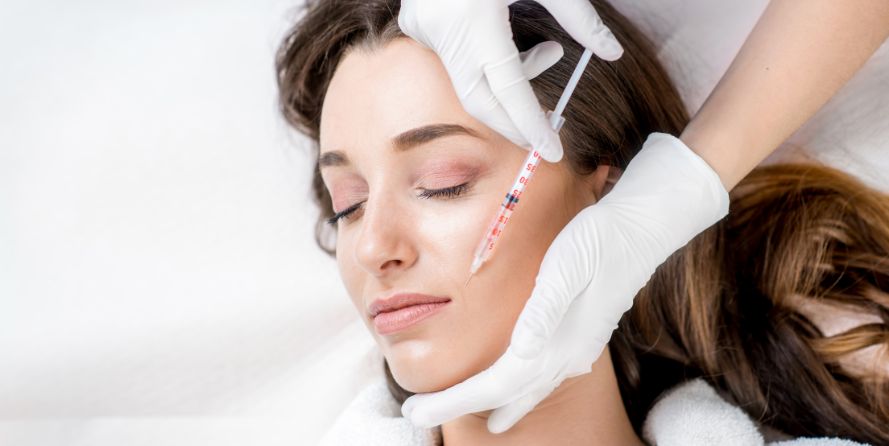
- Injection: Small, precise amounts of Botox are administered into the targeted muscles using a fine-gauge needle. The full procedure typically takes between 10 and 20 minutes, depending on the number of areas being treated.
- Post-appointment: Most patients return to their normal routine immediately. Your provider will go over aftercare instructions, which generally include staying upright for four hours, avoiding intense exercise for 24 hours, and refraining from touching or massaging the treated area.
When Will You See Results?
Botox does not produce instant results. The effects develop gradually as the botulinum toxin settles and the targeted muscles begin to relax. This is an example of a typical timeline:
- Days 3 to 5: You may begin to notice subtle softening of lines and a reduction in muscle movement in the treated area.
- Days 7 to 14: Full results become visible as the muscles have fully relaxed. Most providers recommend waiting the complete two weeks before evaluating the outcome or requesting a touch-up.
- Months 3 to 4: The effects begin to wear off gradually as nerve endings regenerate. You may notice a slow return of some muscle movement as the treatment approaches its end.
Planning ahead tip: If you have a significant event on the calendar, schedule your Botox appointment at least two to three weeks in advance to ensure your results are at their peak.
How Long Do Botox Results Last?
On average, Botox results last approximately 3 to 6 months, though this varies from person to person. Several factors influence how long your individual results will hold:
- Metabolism: The botulinum toxin protein is typically broken down more quickly in people with faster metabolisms, which may shorten the duration of their effects.
- Treatment area: Areas with high levels of muscle activity, such as the area around the mouth, may see results fade sooner than less-active areas like the forehead.
- Frequency of treatment: Patients who maintain a consistent treatment schedule over time often find their results last slightly longer. The targeted muscles may grow accustomed to staying relaxed over the course of several sessions.
The majority of patients make follow-up appointments every three to four months in order to maintain a consistent, updated appearance. You can create a customized maintenance schedule that suits your lifestyle with the assistance of your ThinWorks provider.
Is Botox a Good Fit for You? Candidacy and Considerations
Botox is a well-tolerated option for most healthy adults who are experiencing dynamic wrinkles and want to maintain a refreshed, natural appearance. That said, it is not appropriate for everyone.
Individuals who are pregnant, nursing, or who have certain neuromuscular conditions should not receive Botox injections. Some medications can also interact with the treatment. In order to determine whether Botox is a safe option for you, your provider will review your medical history and current medications prior to your appointment.
Common, temporary side effects may include mild redness or swelling at the injection site, slight bruising, and occasional headaches in the day or two following treatment. A less common concern is temporary eyelid drooping (ptosis), which can occur if the product migrates slightly from the intended area. Choosing an experienced, qualified injector significantly reduces the likelihood of any unwanted outcomes.
Important note: Botox is not a permanent solution. Results gradually fade as the treated muscles regain their normal function. However, regular maintenance treatments allow patients to enjoy consistent improvements over time without any downtime or recovery.
Schedule Your Botox Consultation at ThinWorks in Palm Beach Gardens
Now that you have a clear picture of how Botox works, the next step is speaking with a qualified provider who can assess your specific goals and anatomy. At ThinWorks, our experienced team offers personalized Botox treatments in Palm Beach Gardens, Florida, in a welcoming, professional setting. We take the time to understand what you are hoping to achieve and develop a customized plan tailored to your needs.
Whether you are new to Botox or looking to refine your current approach, we are here to guide you every step of the way. Contact us today to book your consultation. You can also call us at 561-235-0100 or email pbg@thinworks.com. Check out our blog for more information, as well as our related guides.
Related Blog

Dr. John Bacha, specializing in bariatric surgery, offers expert guidance and personal insights to help patients achieve their weight loss goals. Visit to know more.
View Profile


%401x.svg)
