










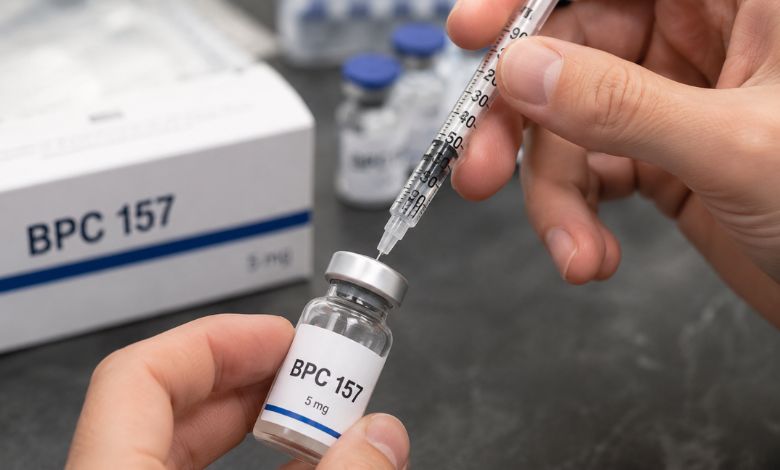
How Long Does BPC 157 Stay In Your System?
If you are starting peptide therapy or planning a break before bloodwork, one of the first questions people ask is: how long does BPC 157 stay in your system? The short answer is that BPC-157 has a very short measurable half-life in the bloodstream (often reported in minutes to a few hours), and the compound is largely cleared from the body within roughly 24 to 72 hours, depending on dose, route of administration, and individual metabolism. Its biological healing effects, however, can continue long after the peptide itself is no longer detectable. In this guide, the clinical team at ThinWorks in Palm Beach Gardens breaks down what the research actually shows, what affects how long it lingers in your body, whether it appears on drug tests, and what that means for you as a patient.
What Is BPC 157?
BPC-157 (Body Protection Compound-157) is a synthetic 15-amino-acid peptide whose sequence corresponds to a fragment of a larger protective protein identified in human gastric juice. Researchers isolated and synthesized this peptide because of the role its parent compound plays in protecting and repairing the stomach lining.
In peptide therapy settings, BPC-157 has gained attention for several researched applications:
- Tendon, ligament, and muscle repair, particularly for soft-tissue injuries that heal slowly with conventional rest and rehab
- Gut lining support, including its potential role in inflammatory bowel conditions and leaky gut symptoms
- Inflammation modulation, helping the body manage the natural inflammatory cascade that accompanies injury
It is important to clarify that BPC-157 does not have FDA approval for any medical condition. It is considered an investigational peptide, and the bulk of research to date comes from small early-phase trials. At ThinWorks, BPC-157 is offered under licensed provider supervision as part of a personalized peptide therapy plan, never as a self-administered or unsupervised product. To understand the compound itself in more depth, you can review our overview of what the BPC-157 peptide is and how it works.
How Long Does BPC 157 Stay In Your System?
For most patients, the most useful way to think about how long BPC 157 stays in your system is to separate the answer into two timelines: how long the peptide is measurable in your bloodstream, and how long its effects last in the body.
Here is a quick clinical snapshot:
Phase Estimated Timeframe
Peak plasma concentration (subcutaneous or intramuscular) Within roughly 3 to 60 minutes
Plasma half-life (research-based estimate) Roughly 15 minutes to a few hours
Substantial systemic clearance Within a few hours of the last dose
Full clearance (most routes and doses) Approximately 24 to 72 hours
Continued biological and healing effects Days to several weeks
Human pharmacokinetic data are limited, but clinical experience and anecdotal patient reports point to a similar pattern: rapid absorption, short measurable presence in plasma, and clearance within one to three days.
Understanding Half-Life vs. Biological Activity
One of the most common points of confusion is the difference between a peptide being "in your system" and a peptide being "active in your system." These are two distinct concepts, and recognizing the difference is crucial.
Pharmacokinetic presence refers to how long the peptide molecule itself can be measured in your blood, urine, or other tissues. For BPC-157, this window is short. The body breaks peptides down quickly through proteolytic enzymes in the blood, liver, and kidneys, and small peptides like BPC-157 are especially susceptible to rapid enzymatic degradation.
Pharmacodynamic activity, on the other hand, refers to the biological effects the peptide triggers. Even after the compound itself is no longer detectable, the processes it set in motion continue. These include angiogenesis (the formation of new blood vessels at injury sites), collagen synthesis, fibroblast activation, and modulation of growth factors that support tissue repair.
This is why many patients on peptide therapy notice continued recovery and reduced inflammation for days or weeks beyond their last dose. The peptide is the trigger, but your body's own healing machinery is what carries the work forward.
Factors Influencing How Long BPC-157 Stays in the Body
Each patient's metabolism of BPC-157 can differ significantly. Several factors influence how long the peptide remains measurable and how long its effects last.
Route of Administration (Subcutaneous, Intramuscular, Oral)
The way BPC-157 enters the body has the largest impact on its clearance profile.
- Subcutaneous injection delivers the peptide beneath the skin's fatty layer, allowing gradual absorption into the bloodstream. Subcutaneous injection is the preferred and most commonly used method for administering BPC-157 in clinical peptide therapy.
- Intramuscular injection introduces the peptide directly into the muscle tissue, often near the injury, which may prolong local tissue exposure.
- Oral administration acts primarily within the gastrointestinal system, with limited systemic absorption. Oral forms are typically chosen when the therapeutic goal involves gut health.
Dose and Frequency
Higher doses tend to remain in circulation marginally longer, but the difference is often small because the peptide is metabolized so quickly. Most published anecdotal protocols range between 200 and 1,000 micrograms per day, though appropriate dosing depends entirely on the patient's goals, body weight, and health profile. At ThinWorks, every BPC-157 protocol is individualized by a licensed provider rather than pulled from a generic chart.
Individual Metabolism, Age, and Body Composition
Several factors, such as age, kidney function, hydration, and metabolism, influence the processing and excretion of peptides. Younger, healthier patients with efficient renal and hepatic function generally clear BPC-157 faster than older patients or those with reduced organ function.
Product Quality and Source
Peptide purity matters enormously. Products from unverified online sources may be underdosed, contaminated, or contain stabilizers that alter how the compound behaves in the body. ThinWorks partners with reputable, licensed compounding pharmacies, which is one of the most important factors in ensuring predictable, safe clearance.
Concurrent Medications and Health Status
Other medications, supplements, and underlying conditions can interact with how peptides are metabolized. Always disclose your full medication list to your provider before starting therapy.
BPC 157 Half-Life: What Research Actually Shows
If you have searched for "bpc 157 half life" or "half life of bpc 157," you have likely seen a range of numbers floating around online, from a few minutes to several hours. Here is what the actual data shows.
Published pharmacokinetic studies in rats and beagle dogs show an elimination half-life of less than 30 minutes across intravenous and intramuscular routes. No formal human pharmacokinetic study has been published, so human half-life remains an estimate — but based on the animal data and the rapid enzymatic breakdown of small peptides, the systemic half-life is best described as short, likely on the order of minutes to under an hour rather than several hours.
What is clear from the research is this: BPC-157 has a short measurable half-life, but its therapeutic action is not limited by that half-life.
Bottom line: BPC-157 leaves your bloodstream quickly, but its work continues for much longer.
Is BPC 157 Detectable on a Drug Test?
This is one of the most frequently asked questions, particularly from athletes, professionals subject to drug testing, and patients preparing for routine bloodwork.
Standard Workplace and Sports Drug Panels
Standard 5-panel, 10-panel, and 12-panel drug tests screen for substances like cannabis, opioids, cocaine, amphetamines, and certain anabolic steroids. They do not screen for peptides like BPC-157. If you are taking a routine pre-employment or random workplace drug test, BPC-157 is not part of the analyte list.
WADA and Competitive Athletes
This is where things change significantly. The World Anti-Doping Agency added BPC-157 to its Prohibited List effective January 1, 2022. It is currently prohibited under Section S0 (Non-Approved Substances) and is also covered under S2 (Peptide Hormones, Growth Factors, Related Substances and Mimetics) on the 2026 Prohibited List. It is banned at all times, both in-competition and out-of-competition, and is not eligible for a Therapeutic Use Exemption. This category encompasses substances that do not currently have approval for human therapeutic use by any regulatory health authority.
What this means practically:
- BPC-157 is banned both in-competition and out-of-competition for athletes governed by WADA, USADA, the NCAA, the UFC, and most major sports federations
- Detection through advanced peptide-specific mass spectrometry can result in suspension, disqualification, and loss of eligibility.
If you are involved in any sport with drug testing, it is advisable not to use BPC-157.
You can verify the current status on the official WADA Prohibited List.
How Long Could BPC 157 Be Detected With Specialized Testing?
Standard drug tests will not detect BPC-157, but specialized peptide assays used at the elite athletic level can. If such a test were used, the typical detection window would likely fall in the range of 24 to 72 hours after the last dose, depending on the dose size, frequency, and route. Detection in urine specifically tends to follow a similar window because urine is one of the primary excretion pathways for BPC-157.
For recreational lifters, jiu-jitsu practitioners, CrossFit hobbyists, or anyone not subject to WADA-style testing, the practical detection risk is minimal. For elite or sanctioned athletes, the risk is real, and the substance should be avoided entirely.
Oral vs. Injectable BPC 157: Does the Form Change Clearance?
The form of BPC-157 you use affects both how long it remains in circulation and where its effects are concentrated.
Oral capsules are typically chosen for gut-related concerns. Because peptides are vulnerable to stomach acid and digestive enzymes, very little oral BPC-157 reaches systemic circulation. Instead, it acts directly on the gastrointestinal lining as it passes through, which is exactly why it can be effective for conditions involving the gut. Systemic clearance from oral dosing tends to be the fastest of the three options.
The most frequent clinical method for administering BPC-157 is subcutaneous injection. It allows for predictable absorption into systemic circulation and is well-suited for general recovery, inflammation, and soft-tissue support. Most patients clear a subcutaneous dose within 24 to 48 hours.
Intramuscular injection, often done close to an injury site, can extend local tissue exposure slightly and is sometimes preferred for targeted tendon or ligament repair. Systemic clearance still typically completes within 48 hours.
Across all three forms, the takeaway is consistent: the peptide itself does not linger long, but the healing cascade it triggers does.
How Long Do BPC 157 Benefits Last After It Clears Your System?
This is where BPC-157 becomes genuinely interesting. Even though the peptide clears within roughly 24 to 72 hours, the biological effects it stimulates can continue for much longer.
The healing processes BPC-157 supports, including angiogenesis, collagen production, fibroblast activation, and inflammation regulation, are multi-step cellular events that unfold over days and weeks. Once the peptide signals the body to begin these processes, they continue under their own momentum.
In clinical experience, most patients begin to notice improvements in pain, mobility, or recovery within the first two to four weeks of consistent therapy, with benefits often deepening over six to eight weeks. For a more detailed look at the timeline, our team has written a guide on how long BPC-157 takes to work.
This is also why most protocols involve consistent daily or every-other-day dosing rather than a single dose. Stable peptide exposure supports a sustained healing response.
Should You Take a Break Before Bloodwork or Surgery?
Many patients ask whether they should pause BPC-157 before scheduled lab work, imaging, or a surgical procedure. The details presented here are meant to offer general information and should not be viewed as a substitute for professional medical consultation.
Always disclose your peptide use to your primary physician, surgeon, or anesthesiologist before any procedure.
Many clinicians recommend pausing BPC-157 for several days before scheduled surgery to reduce any theoretical interaction with anesthesia, blood clotting, or wound-healing protocols.
For routine bloodwork, BPC-157 does not typically interfere with standard labs (CBC, metabolic panels, hormone panels), but your provider may still want a washout depending on what is being measured.
If you are a ThinWorks patient, your provider will help you plan a washout window personalized to your protocol and your upcoming appointment. We never want our patients to be caught off guard at a medical visit.
BPC 157 Peptide Therapy at ThinWorks in Palm Beach Gardens
If you have been searching for clear answers about how long BPC 157 stays in your system because you are considering starting peptide therapy, the team at ThinWorks in Palm Beach Gardens is here to help. Our BPC 157 Peptide Therapy in Palm Beach Gardens, Florida, is delivered under licensed provider supervision, sourced from reputable compounding pharmacies, and tailored to your individual goals, whether that is recovering from a tendon injury, supporting gut health, or managing inflammation.
We do not offer BPC-157 as a mail-order product or a do-it-yourself kit. Every patient meets with our team, completes a health intake, and receives a personalized plan with clear guidance on dosing, administration, and what to expect.
ThinWorks may combine BPC-157 with other supportive options from our broader peptide therapy program when clinically appropriate. Every recommendation is made with your specific goals in mind.
To learn more or discuss further with our team:
- Visit us: 2513 Burns Rd, Palm Beach Gardens, FL 33410
- Call: 561-235-0100
- Email: pbg@thinworks.com
- Free consultation available
Final Thoughts
When it comes to understanding how BPC-157 moves through your body, three key points are worth remembering. First, BPC-157 has a short pharmacokinetic half-life, typically measured in minutes to a few hours, with the bulk of each dose cleared from your system within roughly 24 to 72 hours, depending on dose, route, and individual metabolism. Second, while standard workplace and pre-employment drug tests do not screen for BPC-157, it is banned by the World Anti-Doping Agency and similar regulatory bodies, meaning competitive athletes subject to advanced peptide-specific testing should avoid it entirely. Third, and perhaps most importantly for patients exploring peptide therapy, the biological benefits of BPC-157 last far longer than the peptide itself, with the healing and recovery processes it triggers often continuing for days or weeks after each dose.
Still curious about BPC-157 peptide therapy or want to talk through whether it fits your recovery goals? Reach out to us anytime by emailing pbg@thinworks.com or calling 561-235-0100, and our friendly support staff will walk you through your questions with clear, personalized answers. You can also browse our blog section for more in-depth guides on BPC-157, peptide therapy, and other wellness topics that matter to you.
Frequently Asked Questions
Will BPC 157 Show Up on a Standard Drug Test?
No. Standard workplace and pre-employment drug panels do not test for peptides like BPC-157. These tests screen for substances such as cannabis, cocaine, opioids, amphetamines, and some anabolic steroids. BPC-157 is not part of those analyte lists, so a routine drug screen will not detect it.
How Long is BPC 157 Detectable in Urine?
While no standardized commercial urine test exists for BPC-157, specialized peptide-specific assays used in elite athletic testing could likely detect it for roughly 24 to 72 hours after the last dose. Urine is one of the primary excretion routes for the peptide, but only advanced laboratory methods can identify it.
Does BPC 157 Stay in Your System Longer if You Take It Daily?
Daily dosing does not significantly extend the half-life of each individual dose, but it does maintain consistently elevated peptide levels in the body. This is why most clinical protocols use daily or every-other-day dosing: not because the peptide builds up, but because stable exposure supports a continuous healing response.
How Long Should I Stop BPC 157 Before a Competition?
For athletes subject to WADA-style testing, BPC-157 should not be used at all because it is on the Prohibited List in-competition and out-of-competition. For athletes not under such regulations, a conservative washout of at least 5 to 7 days before any advanced peptide screening is generally suggested, though policies vary by sport and organization.
Is BPC 157 FDA-approved?
No. BPC-157 has not received FDA approval for treating any medical condition. It remains an investigational peptide. At ThinWorks, it is offered under licensed provider supervision as part of a personalized peptide therapy plan, with full transparency about its regulatory status.
How Long Does 5mg of BPC 157 Last?
A 5mg vial of BPC-157 is typically a multi-dose supply rather than a single dose. Depending on your prescribed daily dose (often in the 250 to 500 microgram range), a 5mg vial can last several weeks. Each individual dose still follows the same short half-life and 24 to 72-hour clearance window described earlier.
Is BPC 157 Legal to Use?
The legal standing of BPC-157 differs across different regions and depends on its intended use. The legal status of BPC-157 in the United States has shifted significantly in recent years. In September 2023, the FDA classified BPC-157 as a Category 2 bulk drug substance, restricting its use by compounding pharmacies. In February 2026, HHS announced that BPC-157 would be moved back to Category 1, restoring a pathway for licensed compounding pharmacies to prepare it under a valid physician's prescription, with formal FDA implementation still being finalized. ThinWorks complies with all applicable federal and state regulations and updates its protocols as the regulatory environment changes.
Medical Disclaimer
The purpose of this article is to provide general information and should not be viewed as a substitute for medical guidance from a qualified healthcare professional. Always consult with a licensed healthcare professional before beginning, adjusting, or discontinuing any peptide therapy. Individual results vary based on health history, dosing, and other factors. The content reflects a clinical perspective and published research available at the time of writing.
-p-500.jpeg)
Nick, co-founder of ThinWorks since 2011, is passionate about fitness and health, guiding clients to transformative wellness through his expertise in nutrition.
View Profile


%401x.svg)
