










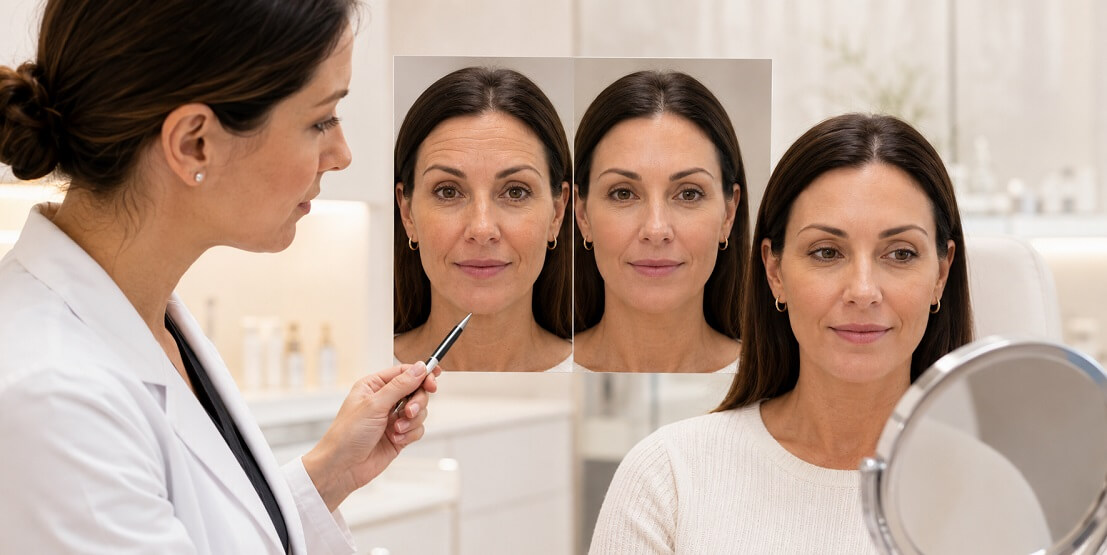
Botox Before and After: Results, Timeline, and Photos
If you're considering Botox treatment, the first thing you probably want to know is: what can you expect from Botox before and after results?
Botox results usually appear gradually, not all at once. Early changes may appear within a few days, while results are usually easier to assess after about two weeks. The full effect may continue developing through day 30, depending on your treatment area, facial movement, and individual response.
In this guide, we'll explain the Botox results timeline, what different facial areas may look like before and after treatment, how to compare photos correctly, what to expect during your appointment, and the factors that can influence your results. So let's dive deeper into the details.
What Does Botox Change in the Face?
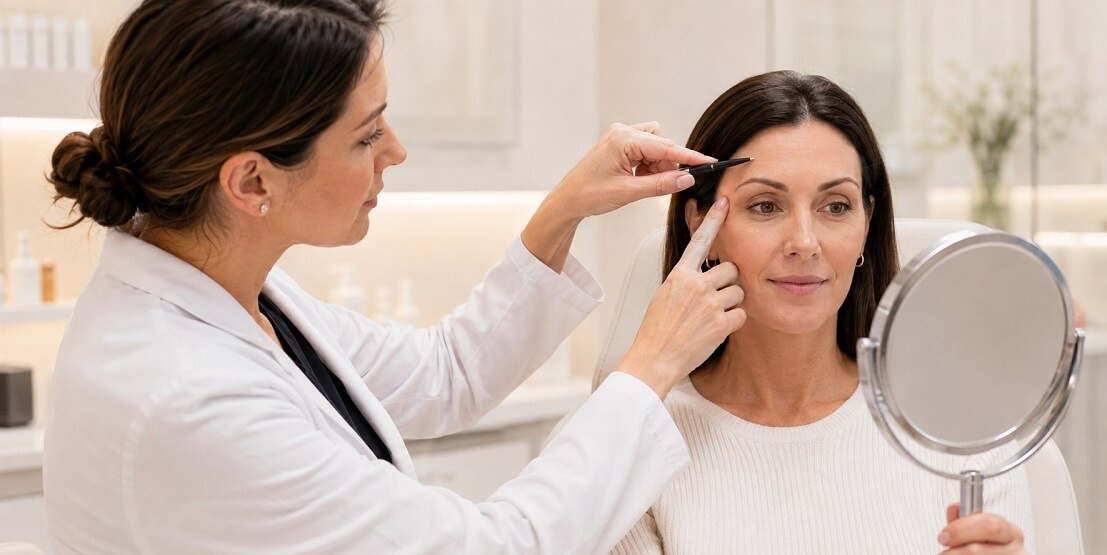
BOTOX Cosmetic is a prescription injectable form of onabotulinumtoxinA. For cosmetic use, it temporarily reduces activity in selected muscles that contribute to expression lines. When those muscles contract less strongly, the skin above them may look smoother. Botox works by limiting repeated muscle contractions in selected areas, which can make certain movement-related lines appear less noticeable.
Botox does not add facial volume. It is not a dermal filler. It also does not resurface the skin or directly correct every line, pore, spot, or texture concern. It is mainly used for lines connected to repeated movement.
Common cosmetic areas discussed on our service page include the forehead, frown lines between the eyebrows, crow's feet, bunny lines, selected lines around the mouth, chin dimpling, certain jawline concerns, neck bands, and a subtle brow lift.
Not every area has the same FDA-approved indication. Botox is commonly used for areas such as forehead lines, frown lines, and crow's feet, with treatment plans based on individual needs. Other placements may be off-label. Your injector should explain the purpose, expected appearance, alternatives, and relevant risks before treatment.
A Realistic Botox Results Timeline
The timeline below is a general guide. Your provider's instructions should take priority because your plan, anatomy, and medical history are individual.
Avoid judging your result on the first day. Redness, tiny bumps, makeup, swelling, or a different expression can create a misleading comparison. Give the treatment time to develop, then follow up if something looks uneven or does not match the plan discussed during your consultation.
Read our guide on how long Botox takes to work for more timing details. You can also review how long Botox may last.
What Forehead Botox Before and After Photos Can Show
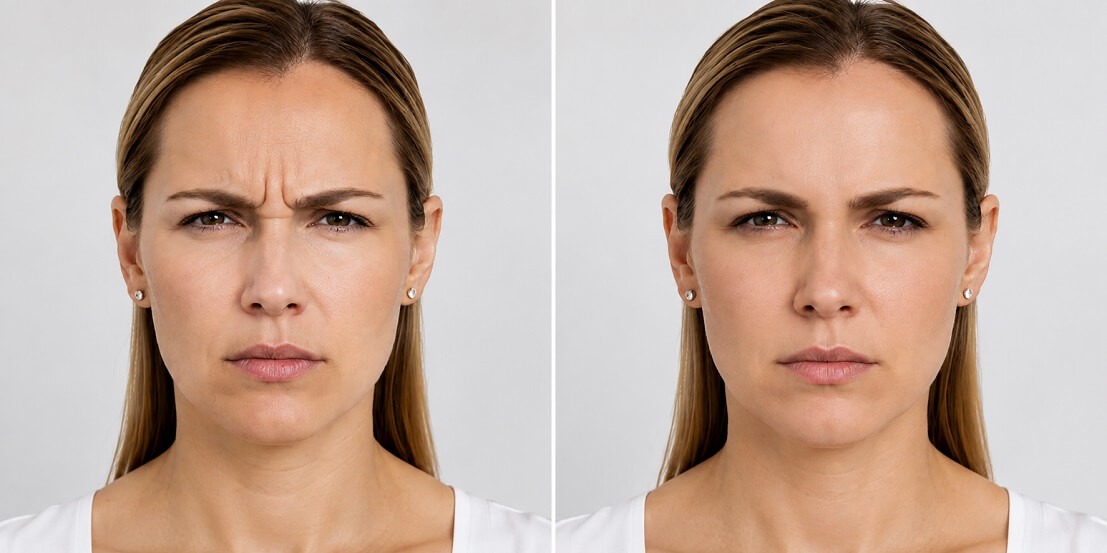
These photos often compare the forehead while the person raises their eyebrows. This activates the frontalis muscle and makes horizontal expression lines easier to see.
A useful result may show softer horizontal lines with a level of movement that matches the person's goals. Some people want a smoother forehead. Others prefer to keep more eyebrow movement. The plan should account for forehead height, brow position, muscle strength, eyelid anatomy, existing asymmetry, and preferred expression.
Forehead treatment should not be evaluated alone. The forehead muscle helps lift the brows, while nearby muscles pull them downward or inward. An injector needs to consider this balance because treating one area can affect brow shape or how heavy the upper face feels.
Check whether both photos use the same eyebrow-raising expression, camera distance, lighting, head position, makeup, and timeframe. The number of units should not be copied from another person's image. Dosing depends on individual anatomy, muscle activity, treatment area, and goals. Our related guide explains how Botox units for the forehead may be planned.
What Frown-Line Results May Look Like
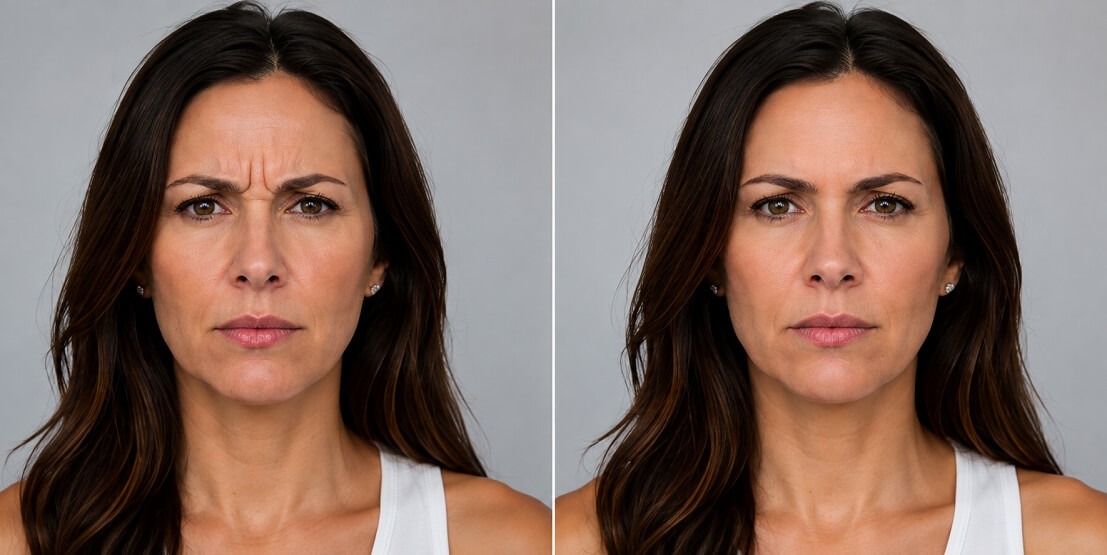
Frown lines form between the eyebrows when the glabellar muscles pull inward and downward. A fair comparison asks the person to frown as strongly as possible in both images.
After the treatment develops, the crease may look softer during a frown because the targeted muscles move less. A deeply etched line that remains visible while the face is relaxed may not disappear completely. That type of line may involve skin changes as well as muscle movement.
A consultation helps your provider view the line while your face is relaxed and moving. A responsible plan should not promise that every frown line will vanish. The realistic goal may be a softer look, reduced contraction, or a more relaxed appearance that still fits your features.
What Crow 's-Feet Results May Look Like

Crow's feet appear beside the eyes and become more visible when you smile or squint. Standardized photos should compare a full smile before treatment with a full smile after treatment.
The visible change may include softer radiating lines near the outer eye. Your smile should still look like your smile. The final appearance also depends on line depth, skin quality, sun exposure, and how strongly you smile.
Do not compare a neutral "after" photo with a smiling "before" photo. The official BOTOX Cosmetic gallery labels the expression used and the number of days after treatment, which is a strong model for transparent photography.
What Full Face Botox Before and After Searches Really Mean
"Full face" is not one standardized treatment. The phrase may refer to several carefully selected areas treated within one plan. It should not imply that every facial muscle needs an injection.
A customized plan might consider the upper face, selected lower-face muscles, or neck bands. Some placements outside standard cosmetic indications may be off-label. Your provider should identify each area being considered and explain why.
Botox also has limits. Volume loss, deep folds, skin laxity, uneven pigmentation, acne scarring, and rough texture may require a different approach. Adding more Botox is not a universal solution for every sign of facial aging.
At ThinWorks, your consultation is used to review facial movement, resting lines, symmetry, and the appearance you want to preserve. Our goal is to help you understand the available options, not to push a one-size-fits-all package.
How to Compare Photos Without Being Misled
The best way to use treatment photos is as an educational reference. They can show the type and range of change that may occur, but they cannot predict your exact outcome.
Confirm the Person Is Real
The image should show a real, consenting patient. Avoid AI-generated faces, heavily edited images, stock-photo pairings, or photos copied from another clinic.
Match the Expression and Setup
Forehead lines should be compared while raising the eyebrows. Frown lines should be compared during a maximum frown. Crow's feet should be compared during a full smile. Camera height, distance, crop, head angle, lighting, and background should remain consistent.
Check the Timeframe
A stated date helps you understand whether the image shows an early change, a two-week review, or a day-30 result. Photos taken immediately after treatment mainly show injection-site changes, not the developed cosmetic effect.
Look for Disclosure
The page should state that individual results vary. It should also identify whether other procedures, makeup, filters, or retouching affected the comparison.
What Happens During an Appointment?
A cosmetic appointment begins with a consultation. Your provider should ask what concerns you, which expressions you want to keep, whether you have received botulinum toxin before, and whether you have had an unwanted result.
During your assessment, your injector may observe how your face moves when you smile, frown, or raise your brows to understand your treatment needs. These expressions help map muscle movement and existing asymmetry. The skin is cleaned, and a fine needle is used to place small amounts in selected points.
You should have time to discuss the planned areas, whether a use is on-label or off-label, expected timing, common reactions, serious warning signs, medications, allergies, prior procedures, product source, provider credentials, cost, and follow-up.
The clinic's service page states that injections are administered by Gabrielle "Gabby" Radabaugh, a Certified Nurse Practitioner with aesthetic-injectable training, with clinical protocols overseen by Medical Director Jaime Snarski, MD. Confirm the current treating provider when you schedule because staffing and clinical assignments can change.
How to Prepare Before Treatment

Tell your provider about all prescription medicines, over-the-counter medicines, supplements, allergies, medical conditions, pregnancy or breastfeeding status, and prior reactions to botulinum toxin products.
Do not stop a prescribed blood thinner, aspirin, anti-inflammatory medicine, or any other medication on your own. Your injector and prescribing clinician should guide medication changes. The risk of stopping an essential medicine may be more serious than the possibility of bruising.
It may also help to arrive with clean skin, avoid scheduling immediately before an important event, report any infection or irritation near the planned site, ask what product will be used, request written aftercare instructions, and take consistent baseline photos.
The FDA has warned about counterfeit and illegally marketed botulinum toxin products. Ask whether the product comes from an authorized source and whether the injector is licensed and trained. Read the FDA's consumer information about botulinum toxin products and facial injectables.
What to Expect Right After Treatment

You may see small bumps, redness, tenderness, swelling, or bruising near an injection site. These reactions are often temporary, but your provider should tell you what is expected and what is not.
Follow the instructions given at your appointment. General recommendations may include staying upright for several hours, avoiding rubbing or firm pressure on treated areas, and postponing strenuous exercise for the period your provider recommends.
Do not rely on a social-media checklist as a substitute for personal instructions. Advice can differ based on the areas treated and your medical history. Our Botox aftercare guide offers a broader overview, but your injector's directions come first.
A follow-up around two weeks may be useful if recommended. It allows the provider to evaluate movement, symmetry, and whether the result is developing as planned. Do not seek an immediate additional dose simply because you see little change during the first few days.
How Long Do Results Last?
Cosmetic results are temporary. The official product website states that results may last up to four months for common upper-face treatment areas. Some people notice movement returning earlier, while others maintain the visible effect longer.
Duration may differ based on the treatment area, dose, muscle strength, individual response, and treatment history. A photo from month one should not be used to promise the same appearance at month four.
Official BOTOX Cosmetic information states that treatments should be spaced at least 90 days apart. Your provider should recommend timing based on approved labeling, your response, and your plan.
What Can Affect the Final Appearance?
Your starting movement, line type, preferred level of expression, existing asymmetry, dose, placement, and photo conditions can all affect the result.
Dynamic lines appear with movement. Static lines remain visible at rest. Botox may soften movement-related lines, but it may not fully correct a deep resting crease. Most faces also have some asymmetry before treatment, so baseline photos are important.
Placement should be based on how nearby muscles work together, not a fixed social-media diagram. Lighting and expression can make a subtle result look dramatic or make a meaningful result look minimal.
When Should You Contact a Medical Professional?
Call your provider if a reaction concerns you, symptoms are worsening, or you notice an unexpected change in facial movement.
BOTOX Cosmetic carries a boxed warning about the possible spread of toxin effects. Seek medical attention if you experience breathing, swallowing, speaking difficulties, muscle weakness, or vision changes after treatment. These symptoms can occur hours to weeks after treatment.
Before treatment, tell your provider if you have had an allergic reaction to a botulinum toxin product, have an infection at the planned site, have a condition affecting nerves or muscles, or are pregnant or breastfeeding. Review the official medication guide and discuss personal risks with a licensed medical professional.
This article is educational. It does not replace medical advice, diagnosis, or treatment.
Questions to Ask During Your Consultation
Ask which areas are recommended and why, whether each placement is FDA-approved or off-label, what level of movement you should expect to keep, what is realistic for resting lines, who will perform the injections, where the product was purchased, which reactions are expected, which symptoms require urgent care, when to return for review, and what the customized plan may cost.
For pricing factors, see how much Botox costs. A personalized quote should be based on your consultation rather than another person's unit count or package.
The Bottom Line
A useful Botox before and after comparison should show a real patient, matching expressions, consistent photography, a clear timeframe, and an honest statement that results vary. Expect gradual changes rather than an instant transformation. The right plan depends on your facial movement, resting lines, preferred level of expression, and the areas recommended after an in-person assessment.
For local care, learn more about Botox injections in Palm Beach Gardens, Florida. Ask questions, review the expected timeline, and make sure you understand both the potential cosmetic change and safety information before proceeding.
Have more questions about Botox before and after? Contact ThinWorks today to schedule your consultation at 561-235-0100 or email pbg@thinworks.com. We take the time to answer your questions and help you understand which approach may align with your aesthetic goals. Visit our blog section to find clear answers to more of your questions.
Frequently Asked Questions
How Soon Can I Judge My Result?
Do not judge it immediately. You may notice changes within a few days. Many providers assess results around two weeks, while official product materials note that full results for common upper-face areas may develop through day 30.
Will I Still Be Able to Make Facial Expressions?
The goal and dose should be discussed before treatment. A customized plan may preserve more or less movement based on your preference and anatomy.
Can Botox Remove Every Forehead Line?
It is mainly used for lines related to muscle movement. A deep line that remains visible while your face is relaxed may not disappear completely.
Are Online Photos a Guarantee?
No. Photos show one person's result under specific conditions. Your anatomy, muscle strength, dose, areas treated, and response can differ.
Can I Get Botox Before a Major Event?
Plan ahead. The result needs time to develop, and temporary redness or bruising can occur. Ask your provider how much lead time is appropriate.
What Happens When It Wears Off?
Muscle activity gradually returns, and treated expression lines may become more noticeable again. The change is usually gradual rather than sudden.

Dr. Jaime Snarski is our Medical Director, who combines bariatric expertise with a passion for preventive health & personalized weight management. Visit to know more.
View Profile


%401x.svg)
