










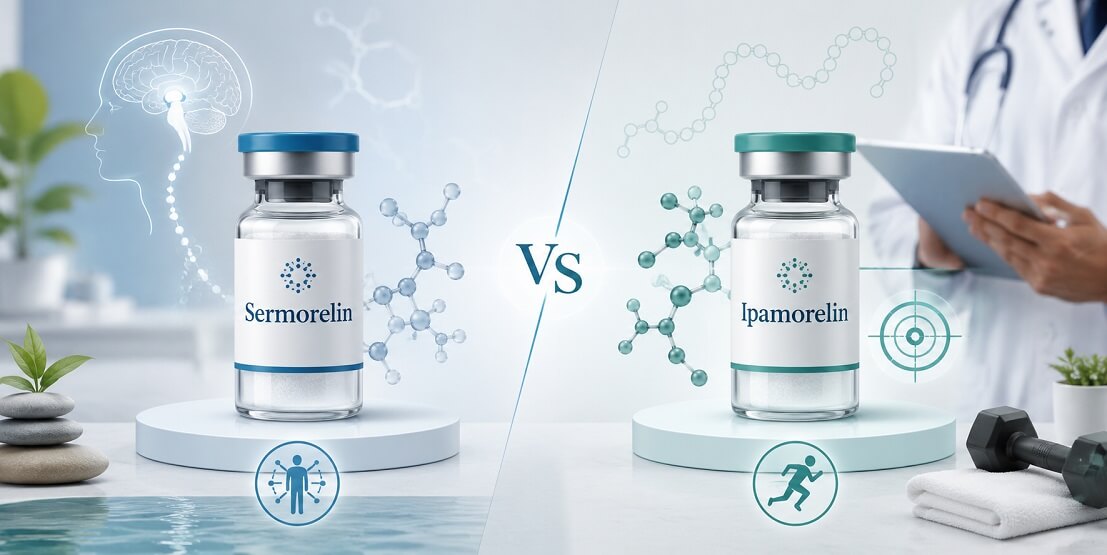
Sermorelin vs Ipamorelin: How the Two Peptides Compare?
If you're weighing ipamorelin vs sermorelin, the first thing you probably want to know is: which one is actually right for you? Both peptides have earned a loyal following among people looking to support their body's natural growth hormone production as they age, and while they sound similar and often get mentioned side by side, they are not the same, so the one that fits your goals may not be the one that fits your neighbor's. Sermorelin and ipamorelin each work through a different pathway and move at a different pace, so the smarter choice comes down to matching the peptide to what you actually want to achieve.
In this guide, we'll explain what each peptide is, how sermorelin and ipamorelin work in your body, the key differences between them, how quickly you may notice changes, how to choose based on your goals, whether the two can be combined, safety and side effect considerations, and the questions we hear most often. So let's dive deeper into the details.
Sermorelin vs Ipamorelin: Side-by-Side Comparison
Comparing ipamorelin vs sermorelin side by side is the fastest way to see where they overlap and where they differ. Both encourage your pituitary gland to release growth hormone, but the pathway, timing, and typical focus are different.
Note: Sermorelin is the slower, steadier option, while ipamorelin is often the faster recovery and body-composition option. There's no across-the-board winner here. The smarter pick is whichever one lines up with your objectives and your overall health picture.
Understanding Growth Hormone Peptides
These peptides are compact strings of amino acids that function as chemical messengers inside the body. Both sermorelin and ipamorelin belong to a group called growth hormone secretagogues. Instead of adding an outside hormone to your system, they prompt your own pituitary gland to release more of the growth hormone you already make.
This distinction matters. Direct human growth hormone (HGH) floods the body all at once. Peptides work with your body's natural pulse and feedback loop, which is why many providers view them as a gentler, more physiological approach. Your pituitary still helps control how much is released. If you have wondered what ipamorelin is or how it relates to sermorelin, the simplest answer is that both are secretagogues that nudge your own system rather than replace it.
What Is Sermorelin and How Does It Work?
Sermorelin is a lab-made peptide that copies the opening 29-amino-acid segment of growth hormone-releasing hormone, essentially the brain's built-in cue that prompts the pituitary to send out growth hormone. When you use sermorelin, it binds to GHRH receptors and encourages the pituitary to increase its own growth hormone pulses.
Because sermorelin follows your body's natural rhythm, it is often discussed in the context of sleep quality and long-term wellness. It has a short half-life, so it is typically given as a small injection at night to line up with your body's natural overnight release. If you want to explore this option in more depth, you can learn about our sermorelin peptide therapy in Palm Beach Gardens, Florida.
What Is Ipamorelin and How Does It Work?
Ipamorelin gets to the same destination by another path. The ghrelin receptor is its target, a site scientists also call GHS-R (growth hormone secretagogue receptor). Ipamorelin latches onto it selectively rather than copying GHRH the way sermorelin does. This triggers a clean, controlled pulse of growth hormone from the pituitary.
What sets ipamorelin apart is its selectivity. Compared with older peptides in its class, ipamorelin is known for having little effect on other hormones such as cortisol and prolactin. Because its activity is relatively short-lived, ipamorelin is often used once or twice a day, depending on the goal and protocol. This selective profile is a big reason ipamorelin is so often discussed for recovery and body composition goals.
The Key Differences Between Sermorelin and Ipamorelin
Now that you know how each one works, here are the differences that tend to matter most when people weigh ipamorelin vs sermorelin for their own plan.
1. Pathway
Sermorelin works through the GHRH pathway. Ipamorelin works through the ghrelin receptor pathway. This is the core mechanical difference between them.
2. Selectivity
Precision is its calling card: ipamorelin zeroes in on its target so cleanly that it barely nudges cortisol or prolactin levels. Sermorelin follows your natural rhythm and is generally well tolerated.
3. Speed and duration
Ipamorelin has a somewhat longer duration of action than sermorelin, and many people notice changes within a few weeks. Sermorelin tends to build more gradually over time.
4. Typical focus
People often lean toward sermorelin when their priorities are better sleep and gradual, sustained benefits over the long haul. Ipamorelin is frequently chosen for recovery, energy, and body-composition goals.
Which Peptide Works Faster? A Realistic Timeline
People often ask about Sermorelin results versus ipamorelin results, and the honest answer is that timelines vary from person to person. Nobody should expect an overnight change. That said, here is a general pattern many people describe when they follow a consistent, provider-guided plan.
Ipamorelin is often described as the faster of the two, while sermorelin tends to work more gradually. Faster is not automatically better. If your priority is steady long-term support, the slower path may suit you better.
Which Is Better, Sermorelin or Ipamorelin? Choosing by Goal
There is no single winner. The question of which is better, sermorelin or ipamorelin, really comes down to what you want to support and how your body responds. Treat this rundown as your jumping-off point, and then run your plan by a qualified provider before committing.
Deciding between sermorelin and ipamorelin is easier once you have clear goals and lab work in hand. Our team can walk you through the options during a peptide therapy consultation.
Can You Take Sermorelin and Ipamorelin Together?
Yes. In many programs, providers use sermorelin and ipamorelin together, or pair ipamorelin with a longer-acting GHRH analog such as CJC-1295 because the two work through different pathways; combining them is a common strategy meant to support a fuller growth hormone pulse.
You will also see this discussed as an ipamorelin and sermorelin stack or blend. If you are curious about a CJC-1295 pairing, you can read about our CJC 1295 Ipamorelin peptide therapy. People also compare Sermorelin vs. CJC 1295 when planning a combination, since each brings a different timing profile.
A note on stacking: Any stacking decision belongs in the hands of a qualified clinician who can tailor the protocol to your test results and what you want out of treatment. More is not a plan. Self-directed stacking is not something we recommend.
A note on availability: The regulatory status of these peptides can differ and continues to evolve. Sermorelin has a long-established compounding history, while ipamorelin's status is under ongoing FDA review. Because this landscape changes, availability and appropriateness should always be confirmed with a qualified provider.
Safety, Side Effects, and Medical Oversight
As long as a licensed clinician handles the prescribing and keeps an eye on your progress, most people handle both peptides without much trouble. As with any injectable, some people notice mild, short-lived reactions. Commonly reported ones include:
- Among the effects patients mention most often is some redness or tenderness right where the shot goes in.
- A slight headache in the early doses is possible, as is short-lived puffiness or a warm, flushed sensation.
- Lightheadedness shortly after a dose
These reactions usually settle as your body adjusts. Significant adverse events rarely show up when dosing is accurate, and a medical professional is overseeing the plan, because compounded product quality can vary, sourcing from a reputable, licensed pharmacy and ongoing provider oversight both matter.
Who Should Be Evaluated Carefully?
The honest answer is that this therapy isn't a fit for every single person. Anyone dealing with an active cancer diagnosis, poorly managed diabetes, specific pituitary disorders, or who is pregnant or nursing shouldn't start these protocols until they've been thoroughly screened. The most sensible way to begin is by carefully going through your health background, current medications, and lab panels. For a broader context on growth hormone-releasing hormone, you can review this.
Overview of GHRH from the National Library of Medicine as an independent, authoritative reference.
What to Expect From Treatment
Peptide therapy generally comes down to tiny under-the-skin injections, usually taken at night so they sync with the body's own after-dark growth hormone rhythm. The needles are fine, similar to insulin syringes, and most people find the process quick and simple after a short training session.
Plans commonly run in cycles of a few months, followed by a check-in to review progress. Your provider will typically order baseline labs before you start and recheck them over time so your plan stays appropriate for you.
Cost and accessibility
What you'll pay hinges on which peptide you choose, the dose you land on, and whether you stick with one compound or run a combination. Sermorelin is often a bit more affordable than ipamorelin, and combination plans can cost more because of the added ingredients. Don't count on insurance here, since carriers almost always file peptide therapy under optional wellness services rather than covered medical care. When you compare options, remember that quality, accurate dosing, and lab monitoring matter more than the lowest sticker price.
Choosing Between These Peptides at ThinWorks
At ThinWorks, we do not use one-size-fits-all protocols. Every plan starts with your goals, your health history, and your lab results. Whether that points toward sermorelin, ipamorelin, or a supervised combination, our focus is on a plan that fits you and is monitored along the way.
Want to go deeper? Our team has put together hands-on resources covering topics like realistic week-by-week sermorelin timelines and how long the peptide lingers in your system.
Conclusion: Making the Right Choice for You
When you compare ipamorelin vs sermorelin, the takeaway is simple. Both are growth hormone secretagogues that encourage your own body to release growth hormone, and both can be part of a thoughtful, provider-guided plan. Sermorelin follows the GHRH pathway and is often chosen for steady, long-term support and sleep. Ipamorelin works through the ghrelin receptor, is highly selective, and is often chosen for recovery and body-composition goals.
Neither peptide is a shortcut, and neither is universally better than the other. The best option is the one that fits your goals, your lab results, and your health history, and that is monitored over time. Some people do well with a single peptide, while others may consider a supervised combination. The wisest move at the outset is to skip the solo guesswork of choosing a peptide yourself. It is talking with a qualified provider who can look at the full picture and help you decide with confidence.
Have more questions about Sermorelin vs. Ipamorelin? Call us at 561-235-0100 or email pbg@thinworks.com. We look forward to helping you look and feel your best. Visit our blog section to find answers to all your questions.
Frequently Asked Questions
What is the Main Difference Between Sermorelin and Ipamorelin?
Sermorelin works through the GHRH pathway and follows your body's natural rhythm, while ipamorelin works through the ghrelin receptor and is highly selective. Sermorelin is often discussed for steady support and sleep, and ipamorelin for recovery and body composition.
Which Works Faster, Ipamorelin or Sermorelin?
Ipamorelin is often described as the faster of the two, with some people noticing changes within a few weeks. Sermorelin tends to build more gradually. Individual timelines depend on your labs, dosing, consistency, and overall health.
Can You Take Sermorelin and Ipamorelin Together?
Yes. Because they work through different pathways, providers sometimes use them together, or pair ipamorelin with CJC-1295. Before layering peptides together, a credentialed provider should first go over your bloodwork and your treatment aims.
Which is Better, Sermorelin or Ipamorelin?
Neither is universally better. Sermorelin may fit steady, long-term goals and sleep, while ipamorelin may fit recovery and body-composition goals. The better option tracks back to your personal goals and a clinician's read on your situation.
How is Sermorelin or Ipamorelin Taken?
Both are given as small subcutaneous injections, often in the evening. Sermorelin is usually administered nightly, while ipamorelin can be used once or twice daily. Most people find the injections quick and easy after a brief training.
How Long Does Peptide Therapy Last?
Plans commonly run in cycles of a few months, followed by a review. Depending on where you land with your targets, how your body reacts, and what follow-up labs reveal, your clinician might recommend running further cycles.
What is the Difference Between Sermorelin and CJC-1295?
Both build off GHRH, but CJC-1295 sticks around in the body considerably longer. That is why many combination plans pair CJC-1295 with ipamorelin. People often compare Sermorelin vs. CJC 1295 when deciding how to structure a plan.

Dr. Jaime Snarski is our Medical Director, who combines bariatric expertise with a passion for preventive health & personalized weight management. Visit to know more.
View Profile


%401x.svg)
