










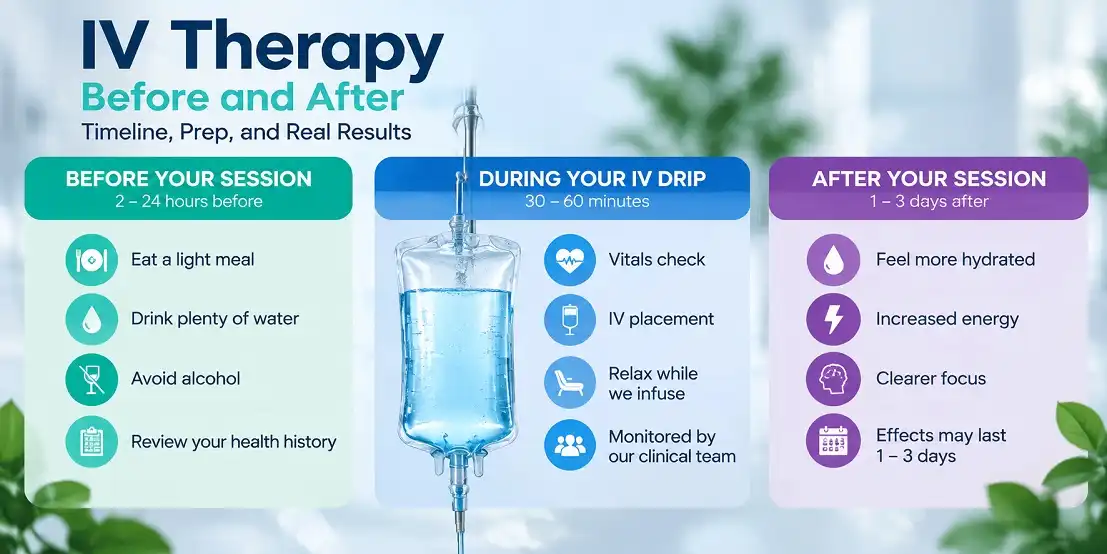
IV Therapy Before and After: Timeline, Prep, and Real Results
If you've got your first drip on the calendar, you probably want to know what IV therapy before and after actually looks like. Before your session, you eat a light meal, drink water, and review your health history with our team. Your appointment includes a 30–60 minute relaxation period while your customized infusion is delivered through a thin IV catheter placed in your vein. Afterward, most people feel more hydrated and clearer-headed within 1 to 4 hours, and that lift usually holds for 1 to 3 days.
Key Takeaways
- Have a small meal a couple of hours before arriving and continue drinking water throughout the morning to support a comfortable visit.
- Sessions run 30 to 60 minutes with no downtime, so you can head straight back to your day.
- Many patients report noticing changes within a few hours after their infusion, with effects that may continue for the next several days.
- Anyone managing a heart, kidney, or liver condition should get physician clearance first.
That's the honest arc of the experience. No dramatic scene, no long recovery, and no need to clear your afternoon.
Still, the details matter. What you eat that morning, how much water you drink, and which formula you pick all shape how the session feels and how long the effects last. Most first-timers walk in with the same three worries: the needle, the side effects, and whether it'll make any difference at all.
In this guide, we'll explain what IV therapy is and how it works, how to prepare in the 24 hours beforehand, exactly what happens step by step at our Palm Beach Gardens clinic, how the drip feels while it runs, a realistic hour-by-hour timeline of how you may feel afterward, the aftercare that protects your results, how the experience differs across our drip menu, who should talk to a doctor first, and how often people come back. Let's dive into the details.
What IV Therapy Is and How It Works
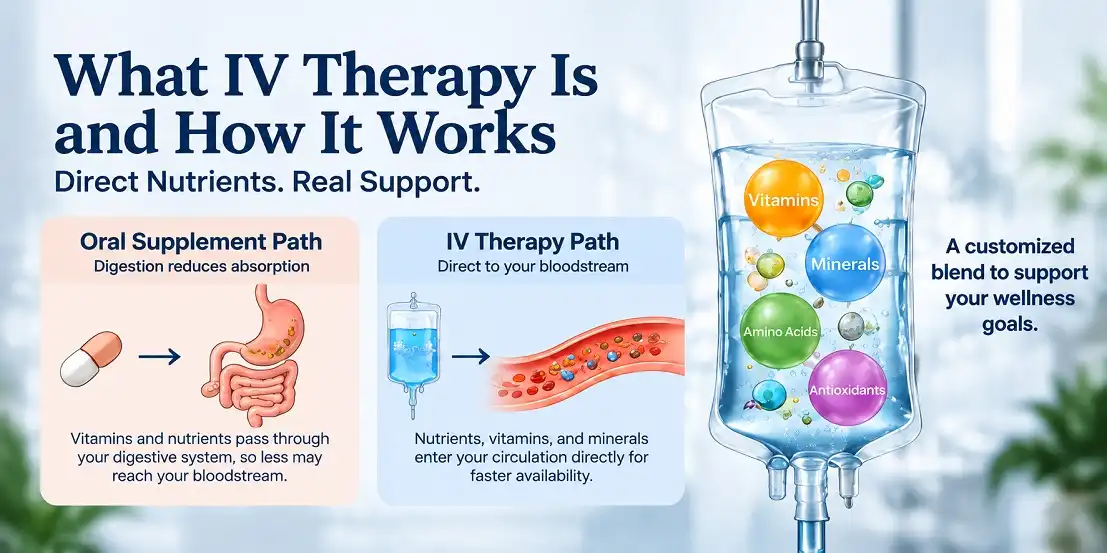
Intravenous therapy, commonly called IV therapy, delivers a combination of fluids, nutrients, vitamins, minerals, and amino acids directly into circulation through a vein.
The difference from a supplement comes down to the route. When you swallow a vitamin, it travels through your digestive tract first, and how much actually reaches your bloodstream depends on your gut health, your medications, and your metabolism. An infusion skips that step entirely. The nutrients enter your circulation directly, which is why the timeline you'll read about below is measured in hours instead of weeks.
ThinWorks creates each IV treatment plan based on your personal needs and provides infusions through qualified clinical professionals with physician supervision.
The Three Stages at a Glance
Before Your Session: How to Prepare
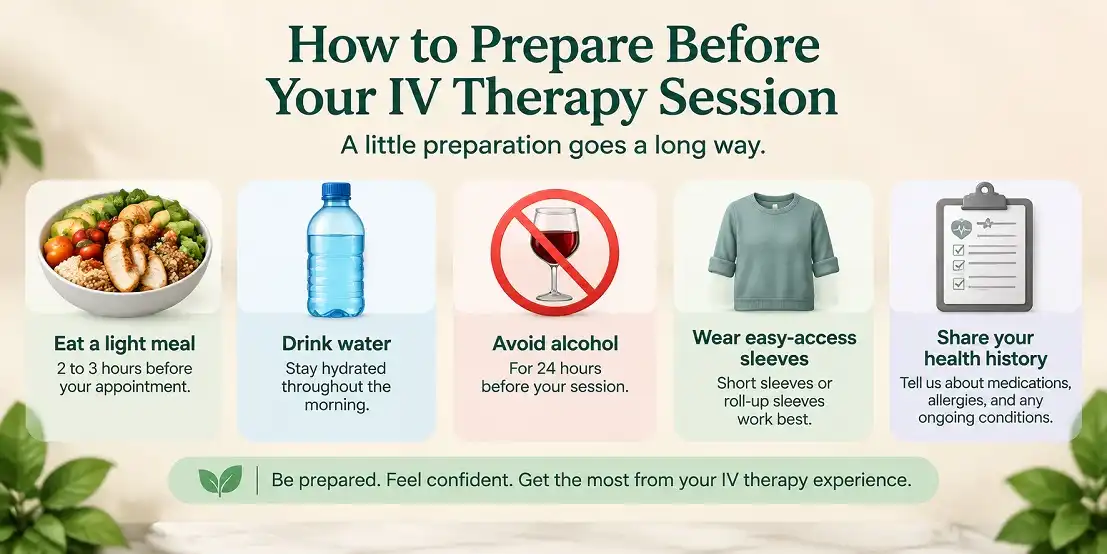
Preparation is the part you control, and it plays a major role in making your appointment smoother and more comfortable.
Eat a Light Meal 2 to 3 Hours Ahead
Don't show up on an empty stomach. Skipping food raises the odds of feeling lightheaded or a little queasy once the drip starts, and that's especially true if you're already nervous. A snack with some protein and a complex carbohydrate keeps your blood sugar steady through the session. Think eggs and toast or yogurt with fruit.
Drink Water the Morning of Your Visit
Staying properly hydrated can make vein access simpler for our clinical. When you've been sipping water for a few hours, your veins are fuller and more visible, which usually means one clean stick instead of two or three attempts. You don't need to chug a liter. Steady sipping through the morning is plenty.
Skip Alcohol for 24 Hours
Alcohol pulls fluid out of your system, which works directly against what you came in for. Booking a session after a long weekend is fine. Just try not to drink the night before.
Wear Sleeves That Roll Up
We usually place the IV in the inner elbow or the back of the hand, so a short sleeve or a top that pushes up past the elbow saves everyone some inconvenience. Bring your phone, headphones, or a book. You'll have time.
Share Your Full Health History
Before selecting your infusion, our team discusses your wellness goals, current concerns, and health background. Share details about medications, supplements, allergies, pregnancy, and ongoing conditions so we can make informed recommendations. This isn't a formality. It's how we choose the right drip and rule out the wrong one.
Some people should get clearance from their own physician before an elective infusion. That includes anyone managing heart failure, kidney disease, or liver disease, anyone who's pregnant or nursing, and anyone taking blood thinners or juggling a complex medication list. If anything requires additional consideration, we will discuss it during your consultation before moving forward.
Get Clear on Your Goal
Wanting to feel better is important, but identifying what you want to improve helps create a more targeted approach. Come in with something specific. Are you flat-out exhausted after a work stretch? Recovering from a bug? Trying to stay on track with a weight loss program? Traveled across three time zones this week? Your answer points to a different formula, and our menu is built around those differences.
What Happens During Your Appointment
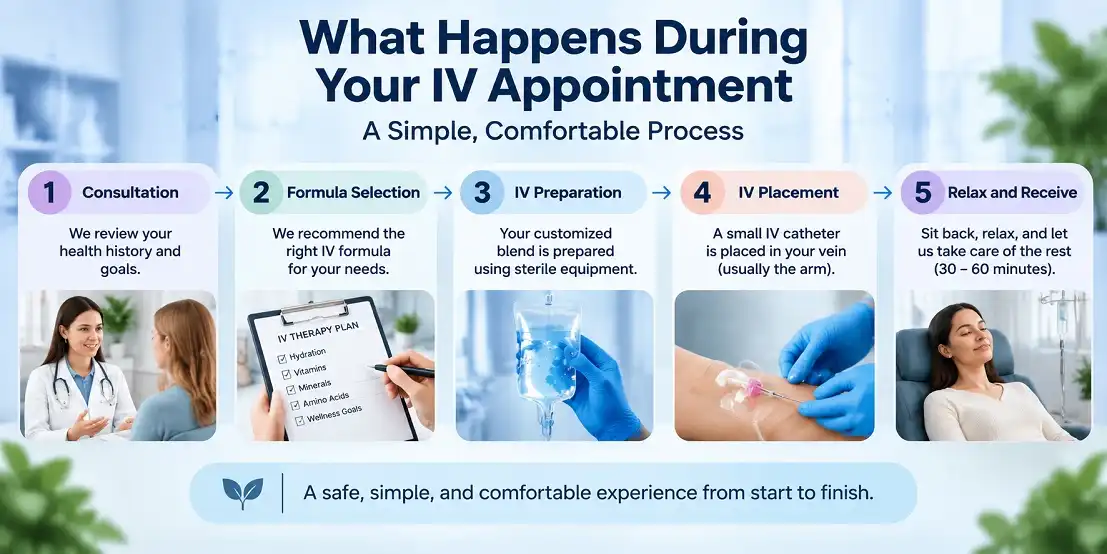
First-timers often picture a hospital room. The reality at our clinic is much calmer. Here's the flow.
Consultation and Formula Selection
We start by talking. A team member walks through your goals, your symptoms, and your history, then recommends the drip that fits. Each ThinWorks infusion is performed by Nurse Practitioner Gabby Radabaugh while following protocols established under the guidance of our Medical Director, Dr. Jaime Snarski, MD. You're not picking a formula off a wall menu with no guidance.
Your Drip Gets Mixed
Your bag is prepared fresh with pharmaceutical-grade ingredients based on what you and the team decided. Preparation only takes a short amount of time, allowing us to ensure your infusion is prepared correctly for your visit.
Placing the IV
A staff member cleans the site with antiseptic and applies a tourniquet. You'll feel a quick pinch, maybe two seconds of it. Then the needle comes out, and a soft, flexible plastic catheter stays in place, taped down. Nothing sharp remains in your arm for the rest of the session.
If needles make you anxious, say so. Looking away, breathing out slowly through the stick, and having something to listen to all help. Most people tell us the buildup was worse than the moment itself.
What the Drip Actually Feels Like
Expect a cool sensation moving up your arm for the first few minutes. The fluid sits at room temperature, which is cooler than your body, so that feeling is completely normal, and it fades as you adjust.
A few other sensations come up often. Formulas with B-complex and vitamin C can leave a faint vitamin taste in your mouth. Magnesium can bring a mild warmth and a relaxed, slightly sleepy feeling. Some people notice light pressure at the site. None of this is cause for concern.
What should you speak up about right away? Chest tightness, trouble breathing, swelling of the lips or tongue, hives, or sharp burning and swelling at the IV site. These reactions are rare, but our team monitors you throughout the session for exactly this reason. Don't wait it out.
Length and Monitoring
Our team stays with you, checks the site, and adjusts the drip rate for your comfort. You relax in a private treatment room. Read, scroll, or close your eyes.
A Realistic Timeline: How You'll Feel Hour by Hour
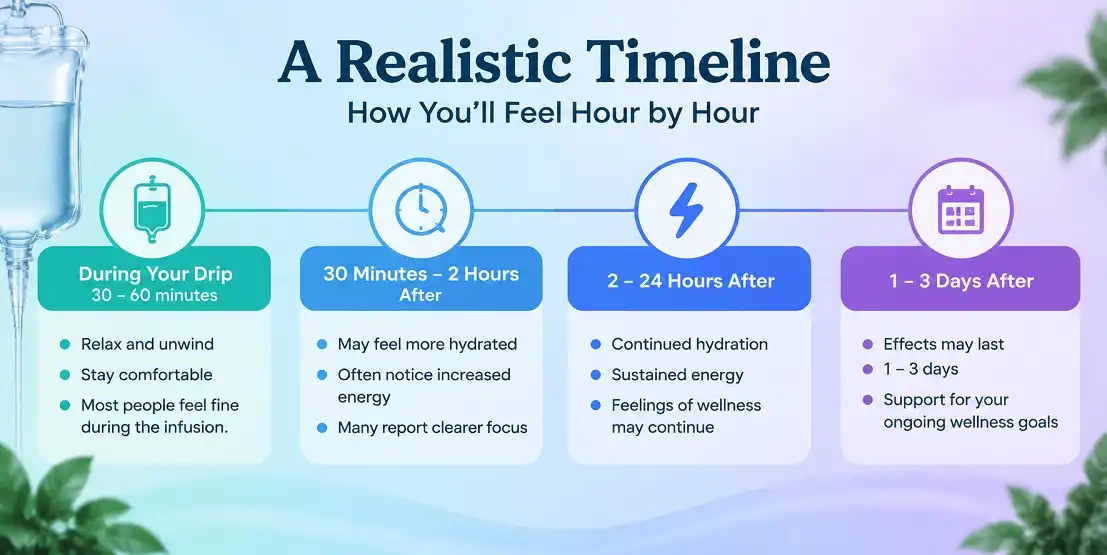
This is the part everyone wants pinned down. Individual experiences vary based on your starting point, your formula, and your overall health, but here's the pattern we see most often.
After your infusion is finished, you can continue with the rest of your day without a recovery period. Some patients report noticing a difference later the same day, depending on their formula, hydration level, and individual response.
This is a common experience we hear from many patients. Someone books a hydration drip the morning after a red-eye, arrives foggy and parched, and reports feeling noticeably clearer by early afternoon. The next morning they're closer to normal than a full night of sleep alone usually gets them. That's a typical hydration response, and it's very different from what you'd expect out of a formula built around cellular support.
A few honest notes. Some people feel a small dip in energy for an hour or two as their body adjusts fluid and nutrient levels. A little tenderness where the IV was placed can happen and is usually temporary. And IV therapy is a targeted boost, not a permanent change. It works best alongside real food, decent sleep, and consistent water, not instead of them.
Aftercare: What to Do in the Next 24 Hours
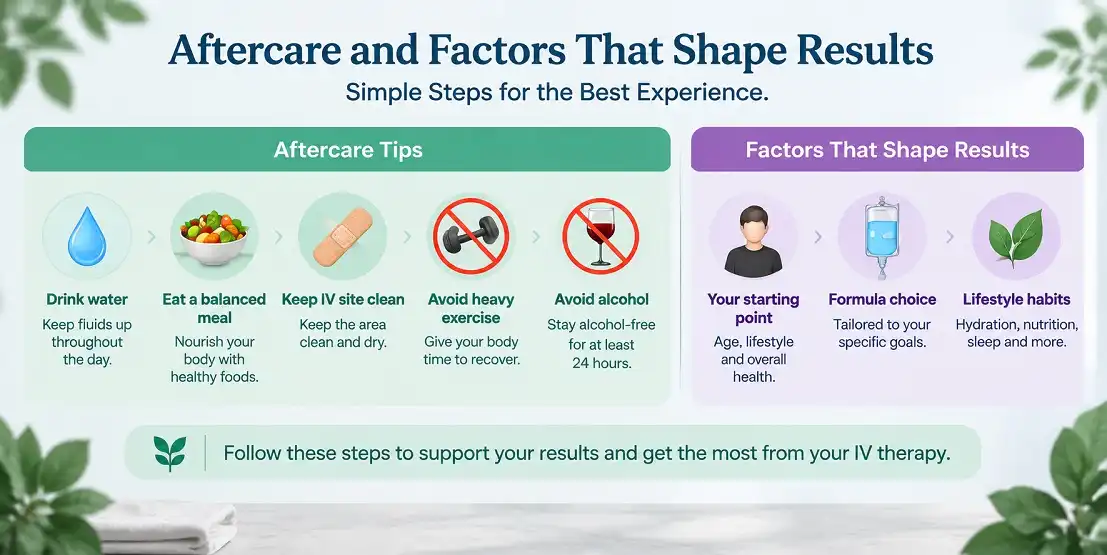
Your aftercare is short, but skipping it is the fastest way to waste a good session.
Keep drinking water. The infusion delivers hydration quickly. Drinking water afterward helps your body maintain hydration throughout the day.
Eat a real meal. Lean protein, complex carbs, and some healthy fat. This matters most if you came in on an empty stomach or you've been sick.
Leave the bandage on for an hour or two. After that, keep the site clean and dry for the rest of the day. Skip long soaks and scrubbing.
Go easy on that arm. No heavy lifting or hard training with the treated arm today. Light activity is fine.
Wait for the sauna and the hot tub. Heat widens your blood vessels and can leave you lightheaded, especially if your blood pressure runs low. Give it until tomorrow.
Hold off on heavy drinking for 24 hours. It can reduce the hydration benefits your body just received.
Watch the site for the rest of the day. Mild tenderness is expected. Spreading redness, warmth, hardness, significant swelling, or any drainage needs attention. So do whole-body symptoms like fever, chills, chest pain, or shortness of breath. While these reactions are not typical, any concerning symptoms should be evaluated promptly instead of waiting for them to resolve on their own.
Why There Are No IV Therapy Before and After Photos
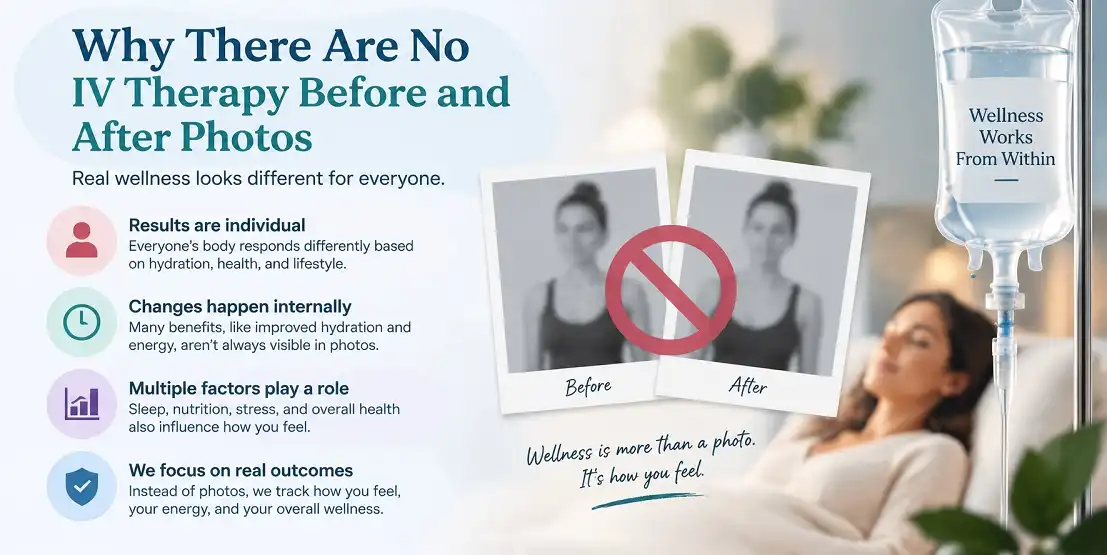
Here's something most articles on this topic skip. These results are felt, not photographed.
When you search for treatment results, you usually expect a side-by-side image. That works for body contouring and weight loss, and you can browse real client results in our gallery for those services. An infusion is different. The changes show up as energy, hydration, mental clarity, and how you feel getting through your afternoon. None of those photographs is well.
So how do you actually track it? Rate a few things on a simple 1 to 10 scale the morning of your appointment: energy, mental clarity, headache, muscle soreness, and sleep quality. Rate them again four hours later and again the next morning. Two or three sessions in, you'll know which formula does the most for you, and our team will have something concrete to work with when we adjust your plan. You can also read what other clients have shared in our testimonials.
How the Experience Differs by Drip
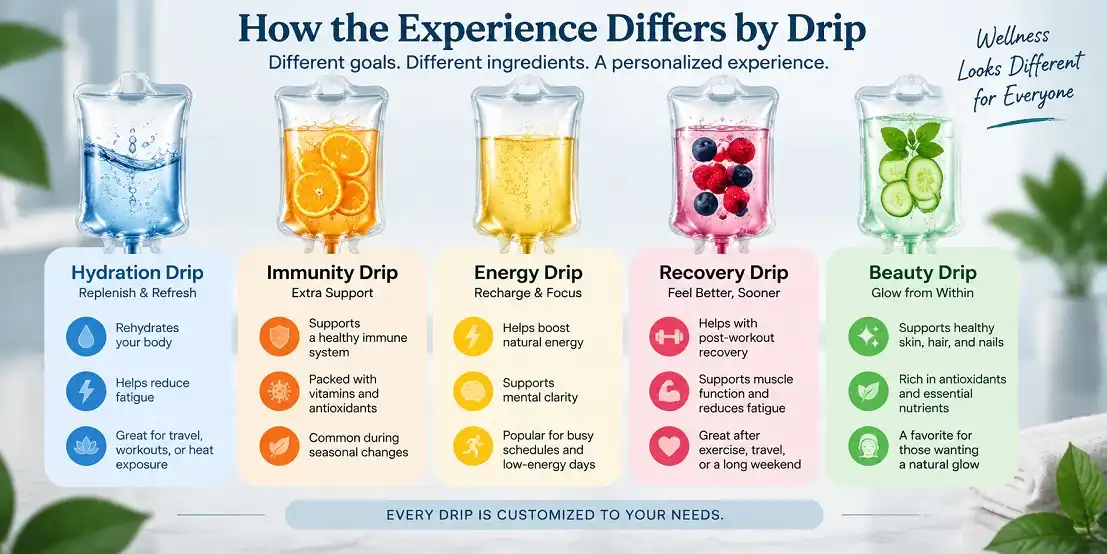
Our IV drip menu is built for different goals, so the "after" varies too. Here's what people typically come in for.
A pattern worth noticing: hydration-based drips deliver the most obvious same-day change, while formulas built around antioxidants and cellular support tend to build over a series rather than one visit. Clear expectations before treatment help you understand what results are realistic and what to expect afterward.
Your body's nutrient requirements can vary based on your unique circumstances. The National Institutes of Health Office of Dietary Supplements publishes clear reference material on vitamins like C and B12, including how absorption works and how much most adults need. Reviewing this information can help you choose an infusion option that matches your goals.
Three Things That Shape Your Results the Most

Two people can get the same formula on the same afternoon and walk out describing completely different days. Three factors explain most of that gap.
Where you started, this is the big one. If you came in genuinely depleted after a stomach bug, a red-eye, or a brutal training week, you've got room to move, and you'll probably feel it clearly. If you already sleep eight hours, eat well, and drink plenty of water, the change is going to be quieter. That isn't a failed session. It just means you had less of a deficit to close.
Which formula did you pick? A hydration drip and a cellular support drip are doing different jobs on different timelines. Matching the formula to the actual problem is the whole point of the consultation, and it's why we don't hand you a menu and walk away.
What you do next. The hours after your session count. Drinking water, eating a proper meal, and getting a normal night of sleep help the effects hold. A late night and a few drinks will erase most of it by morning.
One more thing worth saying plainly. If you tried a drip somewhere else and felt nothing, the formula may simply have been wrong for your situation. Tell our team what you tried and what you were hoping for. That history is useful information, not a dead end.
How Often Do People Come Back?
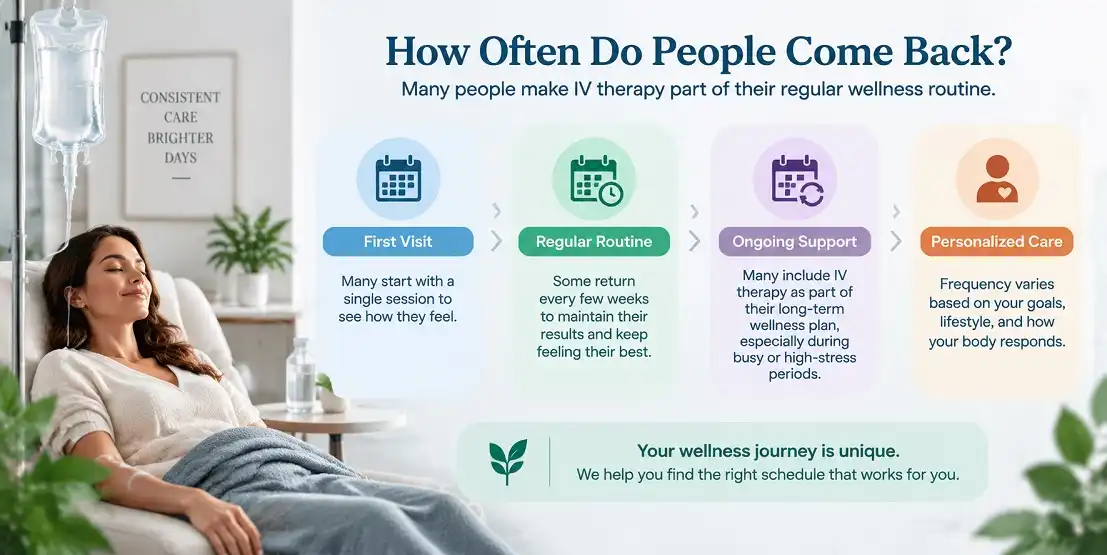
There's no universal schedule. Some patients do best with weekly sessions, particularly while working through an active program. Others settle into every two weeks or once a month. Our team recommends a cadence after your first visit, then adjusts it based on what you report back.
If you want something between drips, Vitamin B12 injections are a quicker option that many patients use as a mid-cycle boost.
The Bottom Line
Most people judge a drip by the hour that follows it. That's the wrong window.
The visit that leaves you satisfied is usually decided earlier, in the conversation about what you're actually trying to fix. A patient who says "I've had four hours of sleep a night all week" gets a different bag than one who says "I want to stay ahead of a cold," and both leave feeling like the session did its job.
A patient who picks a formula off a menu without that conversation is far more likely to shrug afterward.
So go in with a specific problem, pay attention to how you feel over the following two days, and tell your provider what you noticed. Do that twice and you'll know exactly which formula belongs in your routine and how often. That's a far more useful answer than anything you'll read in an article, including this one.
Have more questions about IV therapy before and after your first session? Reach out to ThinWorks by calling 561-235-0100 or sending an email to pbg@thinworks.com, and our team will guide you through the next steps. Check our blog section to know more about IV.
Frequently Asked Questions
How Long Does an IV Therapy Session Take?
Most visits take approximately 30–60 minutes, plus time for consultation and setup. Add about 10 minutes at the start for your consultation and IV placement.
Does IV Therapy Hurt?
Only for a second or two. You feel a quick pinch when the IV goes in. After that, the needle is removed, and only a soft plastic catheter stays in your arm, which you'll barely notice.
How Soon Will You Feel Results After IV Therapy?
Some individuals notice a shift in how they feel shortly after leaving their appointment, while others experience changes gradually over the following hours. Hydration formulas register the fastest. Antioxidant and cellular support formulas build gradually across several sessions.
How Long Do IV Therapy Results Last?
Usually 1 to 3 days. How long the effects hold depends on your formula, how depleted you were going in, and whether you keep drinking water and eating well afterward.
Is There Any Downtime After IV Therapy?
No recovery period is typically needed after treatment, so you can continue with your daily plans once your appointment ends. Just avoid heavy lifting with the treated arm and skip the sauna or hot tub until the next day.
What Should You Not Do After IV Therapy?
Avoid four things for the rest of the day: heavy drinking, hard training with the treated arm, saunas and hot tubs, and soaking or scrubbing the puncture site. Leave the small dressing in place for about one to two hours after your IV is removed.
How Many IV Therapy Sessions Do You Need Before You Notice a Difference?
Often just one, especially with a hydration formula. Formulas built around antioxidants or cellular support typically take a series of sessions before the change is obvious.
Do You Offer Mobile or at-home IV Therapy?
No. We currently provide IV treatments at our Palm Beach Gardens clinic located at 2513 Burns Rd, Palm Beach Gardens, FL 33410, serving patients from nearby communities including West Palm Beach and North Palm Beach. Directions and hours are on our location page.
Can You Combine IV Therapy With a Thinworks Weight Loss Program?
Yes. Many of our patients pair an infusion with an existing program. Bring it up during your consultation, and our team will recommend a formula and a schedule that fit your plan.
IV therapy is designed as a wellness service and should complement, not replace, medical guidance. Before starting an infusion, share any ongoing health concerns or medications with your personal healthcare professional so your treatment choices can be considered safely alongside your current care plan. Individual results vary.
-p-800.jpeg)
Katherine, a weight loss coach at here since 2016, uses her Certified Medical Assistant expertise to guide clients to wellness success. Visit to know more.
View Profile


%401x.svg)
